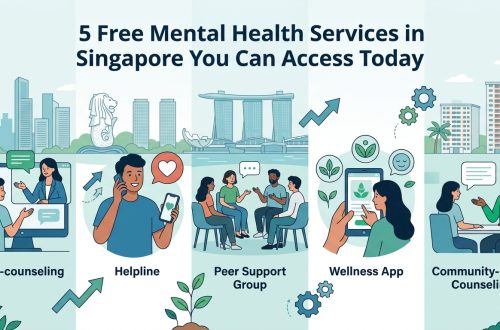
Mental health struggles don’t come with a price tag, and neither should getting help. Whether you’re a student facing exam stress, a young professional navigating workplace pressure, or someone dealing with unexpected life changes, Singapore offers several professional mental health services that won’t cost you a cent.
Singapore provides multiple no-cost mental health services including IMH’s 24-hour helpline, CHAT for youth under 30, Fei Yue’s online counselling, Samaritans of Singapore crisis support, and community counselling centres. These services offer professional support from trained counsellors and therapists without financial barriers, ensuring everyone can access mental healthcare regardless of their economic situation. Most services operate beyond standard office hours for greater accessibility.
Institute of Mental Health 24-Hour Helpline
The Institute of Mental Health runs a round-the-clock helpline at 6389 2222 that connects you with trained mental health professionals any time of day or night.
This service stands out because it’s completely free and operates every single day, including public holidays. You can call when you’re having a panic attack at 3am or when intrusive thoughts won’t let you sleep.
The trained staff can provide immediate emotional support, help you assess your situation, and guide you toward appropriate follow-up care if needed. They handle everything from acute distress to questions about mental health symptoms you’ve been noticing.
For students preparing for major exams or working adults dealing with sudden job loss, having access to professional support without appointment scheduling removes a major barrier to getting help when you actually need it.
CHAT for Young People Under 30
Community Health Assessment Team, known as CHAT, specifically serves Singaporeans and permanent residents aged 16 to 30.
Their walk-in service at *SCAPE operates Monday to Saturday, offering free mental health checks and counselling sessions. No appointment needed for your first visit.
Here’s what makes CHAT particularly valuable:
- Face-to-face assessment by mental health professionals
- Confidential support without parental notification for those 18 and above
- Referrals to appropriate services if you need ongoing care
- Youth-friendly environment designed to feel less clinical
CHAT also runs an online platform called eC2 where you can chat with counsellors via text if you’re not ready for in-person conversations. The text-based format works well for people who find it easier to type out their thoughts rather than speak them aloud.
Young adults transitioning from school to work, dealing with relationship issues, or experiencing their first depressive episode often find CHAT’s age-specific approach more relatable than general services.
Fei Yue’s Online Counselling Service
Fei Yue Community Services provides free online counselling through their eCounselling platform, making professional support accessible from anywhere with internet connection.
You fill out a simple form on their website, and a counsellor responds within three working days. The entire exchange happens via secure email, giving you time to think through your responses without the pressure of real-time conversation.
This asynchronous format suits people with irregular work schedules, caregivers who can’t easily leave home, or anyone who processes emotions better through writing.
The service covers a wide range of issues including family conflict, work stress, grief, and relationship problems. Sessions continue as long as you need them, with no arbitrary cutoff after a set number of exchanges.
For shift workers, parents managing young children, or individuals living in multigenerational households where privacy is limited, being able to access counselling on your own schedule without coordinating appointments removes significant practical obstacles.
Samaritans of Singapore Crisis Support
Samaritans of Singapore (SOS) operates a 24-hour hotline at 1767 specifically for people in emotional crisis or experiencing suicidal thoughts.
Their trained volunteers provide non-judgmental listening and emotional support. They won’t try to fix your problems or tell you what to do. Instead, they create space for you to talk through what you’re experiencing.
SOS also offers CareText, a WhatsApp-based support service at 9151 1767 that operates daily from 2pm to 2am. This text option works well if you’re in a situation where you can’t speak freely on the phone.
The service is completely confidential and anonymous. You don’t need to provide your name or any identifying information.
“Sometimes the most helpful thing is simply having someone listen without judgment when you’re at your lowest point. That human connection can be the difference between giving up and holding on one more day.” – SOS volunteer coordinator
People experiencing sudden bereavements, relationship breakdowns, or overwhelming thoughts of self-harm often reach out to SOS during their darkest moments. The service has helped countless Singaporeans get through crisis points until they could access longer-term support.
Community Mental Health Services
Several community-based organisations across Singapore provide free counselling services, though availability and eligibility criteria vary.
Care Corner Counselling Centre offers free sessions for individuals and families dealing with mental health challenges, relationship issues, or life transitions. They have multiple locations island-wide.
Family Life Society provides counselling at various Catholic churches across Singapore. You don’t need to be Catholic to access their services. Their counsellors work with individuals, couples, and families on a sliding scale basis, with free sessions available for those who can’t afford to pay.
Singapore Anglican Community Services runs counselling centres in several neighbourhoods, offering support for anxiety, depression, grief, and family conflicts without charge for those facing financial difficulties.
Here’s how to access these community services:
- Contact the organisation directly via phone or their website
- Explain your situation and ask about free counselling availability
- Complete an intake assessment, usually over the phone or in person
- Get matched with a counsellor based on your needs and their availability
- Attend your first session, typically within two to four weeks
Comparing Your Options
Different services suit different needs and situations. This table breaks down key differences to help you choose:
| Service | Best For | Response Time | Format | Hours |
|---|---|---|---|---|
| IMH Helpline | Immediate support, any age | Instant | Phone | 24/7 |
| CHAT | Youth under 30, first-time help | Walk-in same day | In-person, online chat | Mon-Sat |
| Fei Yue eCounselling | Flexible schedules, prefer writing | 3 working days | Anytime | |
| SOS | Crisis situations, suicidal thoughts | Instant | Phone, WhatsApp | 24/7 |
| Community Centres | Ongoing counselling, local access | 2-4 weeks | In-person | Varies |
Choose based on how urgent your need is, what communication style feels comfortable, and whether you need immediate crisis support or longer-term counselling.
What These Services Actually Provide
Free mental health services in Singapore aren’t just basic emotional support. They offer professional-grade care from trained counsellors and mental health workers.
Most services can help with:
- Depression and persistent sadness
- Anxiety and panic attacks
- Stress management for work or school
- Relationship and family conflicts
- Grief and loss
- Self-esteem issues
- Life transitions and adjustment challenges
The counsellors use evidence-based approaches including cognitive behavioural techniques, solution-focused therapy, and person-centred counselling. These are the same methods you’d encounter in paid private practice.
What they typically cannot provide is psychiatric diagnosis or medication management. If your counsellor determines you need psychiatric evaluation, they’ll refer you to appropriate medical services. Some of these referrals may involve costs, though subsidies are often available through polyclinics and restructured hospitals.
Building mental resilience techniques alongside professional support can strengthen your recovery and help prevent future episodes.
Common Concerns About Free Services
Many people hesitate to use free mental health services because of misconceptions about quality, confidentiality, or eligibility.
“Will the quality be lower because it’s free?”
No. The counsellors at these organisations hold professional qualifications and undergo regular training. Many have years of experience. The services are free because they’re funded by government grants, donations, and community support, not because they’re inferior.
“Will my information be shared with my employer or family?”
These services maintain strict confidentiality. They won’t contact anyone without your explicit permission, except in rare situations involving immediate danger to yourself or others. For those under 18, some services may require parental involvement, but many don’t.
“Am I taking resources away from people who need them more?”
If you’re struggling with your mental health, you deserve support. These services exist specifically to help people like you. Don’t wait until you’re in crisis to reach out. Early intervention often prevents situations from becoming severe.
“What if I’m not Singaporean?”
Eligibility varies by service. Some like IMH’s helpline are available to anyone calling from Singapore. Others like CHAT require citizenship or permanent residency. Always check directly with the service about their criteria.
Making the First Contact
Reaching out for help the first time feels intimidating. Here’s what typically happens when you contact these services:
For helplines, you’ll speak with a trained responder who’ll ask about what you’re experiencing. They might ask how long you’ve been feeling this way, whether you’re safe right now, and what kind of support would be most helpful. The conversation is guided by your needs and comfort level.
For online services like Fei Yue’s eCounselling, you fill out a form describing your situation. Be as honest and detailed as you’re comfortable being. The more context you provide, the better the counsellor can understand and support you.
For walk-in services like CHAT, you’ll complete a brief assessment form and speak with a staff member about your concerns. They’ll explain what services they can offer and what the next steps might look like.
You don’t need to have everything figured out before you reach out. You don’t need to articulate your problems perfectly. Just start the conversation, and the professionals will help you work through the details.
When to Seek Immediate Help
Some situations require urgent attention. Contact emergency services or go to the nearest hospital emergency department if you:
- Have specific plans to harm yourself or others
- Are experiencing psychosis, hallucinations, or severe confusion
- Are in immediate physical danger
- Cannot keep yourself safe
For these situations, call 999 or go directly to the Institute of Mental Health’s emergency department, which operates 24/7.
For serious but not immediately life-threatening concerns, the IMH helpline and SOS can provide crisis support while helping you access appropriate follow-up care.
Don’t downplay your distress or wait to see if things get worse. Mental health professionals would rather you reach out early than struggle alone until the situation becomes critical.
Beyond Crisis Support
While these free services provide excellent initial support and crisis intervention, some people need longer-term therapeutic relationships or specialised treatment.
If your counsellor recommends ongoing therapy, ask about subsidised options. Polyclinics offer mental health services at subsidised rates. Family Service Centres across Singapore provide counselling on a means-tested basis.
For students, many educational institutions offer free counselling services. Check with your school’s student services office about what’s available.
Some workplaces provide Employee Assistance Programmes that include free confidential counselling sessions. Check your employee handbook or speak with HR about mental health benefits.
The free services covered here can serve as your entry point into Singapore’s mental health support system. They help you understand what you’re experiencing, provide immediate relief, and connect you with appropriate longer-term resources if needed.
Your Mental Health Deserves Attention
Mental health challenges affect people across all backgrounds, income levels, and life stages. Seeking support isn’t a sign of weakness. It’s a practical step toward feeling better and functioning more effectively in your daily life.
The free mental health services available in Singapore remove financial barriers that prevent too many people from getting help. Whether you’re dealing with a temporary stressful period or a more persistent mental health condition, professional support is available without cost.
Start with whichever service feels most accessible to you right now. Make that phone call, send that email, or walk into that centre. The hardest part is often just beginning. Once you take that first step, you’ll find people ready to support you through whatever you’re facing.