When the bottom falls out, your first instinct might be to freeze. A retrenchment letter lands on your desk. A medical emergency drains your savings. A sudden debt spiral makes your phone feel like a ticking time bomb. In a city like Singapore, where the cost of living is relentless, a financial crisis can feel isolating and shameful. But here is the truth you need to hold onto: Singapore has a robust safety net, and help is available right now if you know where to look. This guide is your map to finding emergency financial aid in Singapore in 2026, without the jargon or the runaround.
This toolkit covers the five most reliable sources of emergency financial aid in Singapore for 2026: Social Service Offices (SSOs), Community Development Council (CDC) vouchers, the Community Care Endowment Fund (ComCare), migrant worker support centres, and debt counselling services. You will learn where to apply, what documents to bring, and how to avoid common pitfalls that delay relief. Your recovery starts with one step.
Start with the Social Service Office Near You
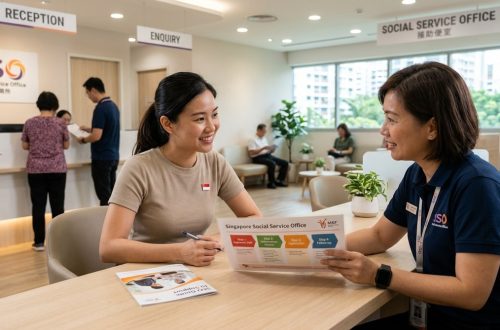
Your first stop for emergency financial aid in Singapore should be your nearest Social Service Office (SSO). These are government-run one-stop centres that assess your situation and connect you to the right scheme. They handle everything from cash assistance to food rations.
There are 24 SSOs across Singapore, from Jurong to Bedok. You do not need an appointment for an initial chat, but calling ahead saves time. The hotline is 1800 222 0000.
What to bring on your first visit:
- Your NRIC or FIN card.
- Proof of income (latest payslip, or a letter from your employer if you have been retrenched).
- Bank statements from the last three months.
- Medical bills or termination letters if applicable.
Do not worry if your documents are not perfect. The SSO officer will guide you on what else you need. They are trained to help people in distress.
Government Schemes That Put Cash in Your Hands
Once you are registered with an SSO, you can apply for ComCare. This is the main government scheme for low-income individuals and families facing a crisis. It comes in three forms:
- Short to Medium Term Assistance (SMTA): Monthly cash payouts for up to a year. This helps cover rent, utilities, and basic food.
- Interim Assistance: A one-off payment for urgent needs while your SMTA application is being processed.
- Job Support: Extra funds if you are actively looking for work or attending training.
To apply, your household monthly income must be below $1,900 per person (or $3,300 for a family of four). These figures are reviewed annually, so check with your SSO for the 2026 thresholds.
For migrant workers, the Migrant Workers’ Assistance Fund (MWAF) provides similar crisis support. Call the Migrant Workers’ Centre hotline at 1800 225 8899. They can help with food, accommodation, and legal advice if your employer has not paid your salary.
CDC Vouchers: The Most Flexible Relief
The Community Development Council (CDC) vouchers are a lifesaver because they work like cash at most supermarkets and heartland shops. In 2026, the CDC Vouchers Scheme has been expanded to cover more households.
How to get them:
- Visit your CDC’s website (Central Singapore, North East, North West, South East, or South West).
- Apply online using your Singpass.
- Or walk into your nearest Community Club (CC) and ask for the Social Assistance team.
Each household can receive up to $200 in vouchers per quarter, depending on your assessed need. You can use them for groceries, medicine, and even school supplies. They are not taxable and they do not affect your other benefits.
One important tip: vouchers expire within 3 months of issue. Use them as soon as you get them.
Where Charities Step In
Government aid is the foundation, but charities fill the gaps. Here are the most trusted ones for emergency financial aid in Singapore:
- The Salvation Army (Singapore): Offers emergency cash assistance, food packs, and rental support. Call their Helpline at 6285 2000.
- Chinese Development Assistance Council (CDAC): Provides financial aid for families with school-going children. They also offer free tuition and counselling.
- Mendaki: For the Malay/Muslim community. They have a specific Bantuan Kewangan (Financial Aid) scheme for crisis situations.
- Singapore Indian Development Association (SINDA): Offers temporary financial relief for Indian Singaporeans facing job loss or medical emergencies.
- Food from the Heart: If you need food immediately, they distribute food packs islandwide. No questions asked.
Expert advice from a former SSO case worker: “Do not try to solve everything alone. The biggest mistake people make is waiting until their situation is desperate. The moment you miss a rent payment or a utility bill, walk into an SSO. The earlier you ask, the more options we have to help you.”
Debt Relief Options for Singaporeans in Crisis
If your emergency involves existing debt, you need specialised help. The Credit Counselling Singapore (CCS) offers free, confidential debt management advice. They can help you negotiate with banks for lower interest rates or a repayment plan.
The Debt Repayment Scheme (DRS) is a formal court process for individuals who owe less than $100,000. It freezes all interest and legal action while you pay back what you can over a set period.
Here is a table that clarifies the main debt relief options:
| Option | Best For | Key Feature | How to Access |
|---|---|---|---|
| Credit Counselling Singapore (CCS) | Anyone with unsecured debt | Free negotiation with creditors | Call 6225 5227 |
| Debt Repayment Scheme (DRS) | Individuals owing under $100,000 | Court protection from creditors | Apply via the Official Assignee’s office |
| CDAC Debt Management Programme | Malay/Muslim families | Includes financial literacy coaching | Visit any CDAC centre |
| SINDA Financial Counselling | Indian Singaporeans | Personalised budget planning | Call 1800 225 5533 |
What Not to Do When Seeking Financial Aid
Many people make the process harder than it needs to be. Avoid these common mistakes:
- Hiding assets or income. SSO officers cross-check with CPF and IRAS. Lying disqualifies you permanently.
- Going to multiple SSOs at once. You must apply at the SSO nearest to your residential address. Going to another branch will only delay your case.
- Ignoring the paperwork. If the officer asks for a specific document, get it within 7 days. Delays can reset your application.
- Borrowing from loan sharks. This is the fastest way to make a bad situation dangerous. Always exhaust charity and government aid first.
A Step-by-Step Process for the First 48 Hours
Time is critical. Here is a numbered action plan for the first 48 hours after a financial emergency:
- Secure your immediate needs. Call the SSO hotline (1800 222 0000) and explain your situation. Ask for an urgent appointment. If you have no food, ask for a food pack referral.
- Gather your documents. Find your NRIC, latest payslip, and any bills showing overdue amounts. Take photos of them on your phone in case you lose the originals.
- Apply for CDC vouchers online. Use your Singpass to submit a claim on your district’s CDC website. You will get a digital voucher code within 24 hours.
- Contact a charity for backup. Call The Salvation Army or Food from the Heart to arrange for a food pack while your SSO application processes.
- Tell one person you trust. Isolation makes everything worse. A friend or family member can help you keep track of appointments and deadlines.
Rebuilding Your Stability After the Crisis
Getting emergency aid is the first step. The next step is making sure you do not end up here again. That is where resilience comes in.
Once your immediate crisis is managed, consider these longer term moves:
- Enrol in a free financial literacy workshop. CDAC, Mendaki, and SINDA all offer them. You will learn budgeting, saving, and how to spot a debt trap.
- Check your eligibility for Workfare. If you are a low-wage worker, the Workfare Income Supplement scheme can top up your salary and your CPF.
- Build a small emergency fund. Even $20 a week adds up. When you have $500 saved, a small crisis will not derail you.
- Talk to a counsellor. Financial trauma is real. The free services listed in our guide to 5 Free Mental Health Services in Singapore You Can Access Today can help you process the fear and shame.
Your Next Step Starts Now
Reading this guide is not enough. The real relief comes when you take action. Pick up your phone right now. Call the SSO hotline. Or walk to your nearest Community Club. You do not need to have everything figured out. You just need to start the conversation.
Singapore’s safety net exists for moments exactly like this one. You are not a burden for using it. You are a person in a tough spot who deserves a way back to solid ground. Take that first step today, and tomorrow you will be one step closer to stability.
If you want to hear how other Singaporeans have navigated this journey, read our story about Three Singapore Families Share How They Overcame Financial Crisis Together. Their experiences might give you the courage to keep going.