When life hits you hard, the instinct is often to close the door and handle it alone. That’s especially true in Singapore, where we’re raised to value self-reliance and not burden others with our problems. But going it alone during a crisis isn’t just harder. It’s often impossible.
The good news? Singapore has a surprisingly rich support network Singapore residents can tap into, from government programmes to grassroots communities, professional services to informal neighbour networks. The challenge isn’t finding help. It’s knowing where to look and being willing to reach out.
Building a support network in Singapore means identifying the right mix of professional services, community resources, trusted individuals, and peer groups that match your specific needs. From mental health hotlines and counselling centres to neighbourhood initiatives and online communities, accessible help exists across the island. The most resilient people don’t face challenges alone. They know exactly who to call and where to turn when things fall apart.
Understanding what a support network actually means
A support network isn’t just your family and friends. It’s a web of connections that includes professionals, peers, community groups, and resources you can access when you need practical help, emotional support, or expert guidance.
Think of it in layers. Your inner circle might be the people you call at 2am. The next layer could be colleagues, counsellors, or support group members. The outer layer includes helplines, government services, and community programmes you might not use often but need to know exist.
Many Singaporeans only realise they lack a proper support network when crisis hits. A job loss. A relationship breakdown. A mental health episode. Suddenly, you’re scrambling to figure out who to talk to and where to get help.
Building your network before you need it makes all the difference. It’s like having an emergency fund, but for your emotional and social wellbeing.
Professional mental health support you can access today
Singapore’s mental health infrastructure has grown significantly in recent years. You don’t need a referral or a diagnosis to reach out for help.
The Institute of Mental Health (IMH) operates a 24-hour helpline at 6389 2222. It’s staffed by trained professionals who can provide immediate support and guidance. If you’re in crisis, this is your first call.
Samaritans of Singapore (SOS) runs a confidential helpline at 1767 from 24/7. They’re there for anyone experiencing emotional distress, not just those in immediate danger. Sometimes you just need someone to listen without judgement.
For young people, CHAT (Community Health Assessment Team) offers free mental health checks and support for those aged 16 to 30. Walk into any of their centres across Singapore, no appointment needed.
If you prefer professional counselling, Family Service Centres (FSCs) are located in every neighbourhood. They provide affordable or free counselling based on your income. Services include individual therapy, family counselling, and crisis intervention.
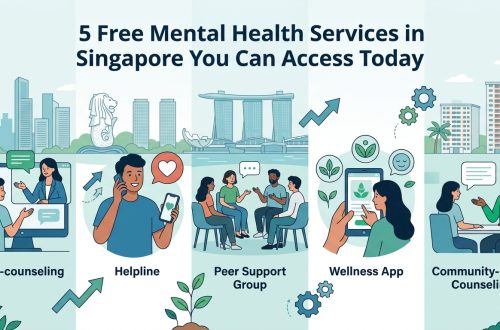
Here’s a practical breakdown of 5 free mental health services in Singapore you can access today without lengthy wait times or complex referrals.
Government and community programmes that provide practical help
Mental health support is just one piece of the puzzle. When you’re facing financial hardship, family issues, or practical challenges, you need tangible assistance.
ComCare, administered by the Ministry of Social and Family Development (MSF), provides short-term to medium-term assistance for individuals and families who need help with basic living expenses. This includes cash assistance, help with medical bills, and support for children’s education needs.
Social Service Offices (SSOs) are your first point of contact for government assistance. They assess your situation and connect you to the right programmes. Every neighbourhood has one.
If you’ve lost your job, the Workforce Singapore (WSG) Career Centres offer more than just job listings. They provide career coaching, skills training, and retrenchment support programs that help you get back on your feet.
For families struggling with caregiving responsibilities, the Agency for Integrated Care (AIC) connects you to eldercare services, respite care, and financial assistance schemes. Caregiving can be isolating. These services help lighten the load.
Community Development Councils (CDCs) run neighbourhood programmes that provide everything from food assistance to skills training. They’re particularly good at connecting you to hyperlocal support that might not be widely advertised.
Building your personal circle of trusted support
Professional services are crucial, but they can’t replace the human connections that sustain you through hard times. Your personal support network needs to include people who know you, care about you, and can show up when you need them.
Here’s how to build that circle intentionally:
-
Identify your current connections honestly. Write down the names of people you could call if you needed emotional support, practical help, or just company. If that list is shorter than five people, it’s time to expand it.
-
Invest in relationships before you need them. Support networks are built on reciprocity. Be the person who checks in, offers help, and shows up for others. That foundation matters when you eventually need support yourself.
-
Join groups based on shared experiences or interests. Whether it’s a running club, a faith community, a hobby group, or a professional association, regular participation builds genuine connections. These relationships often become lifelines during difficult periods.
-
Don’t rely on a single person for all your support needs. Different people serve different roles. One friend might be great for practical advice. Another might excel at just listening. A third might make you laugh when you need distraction. Spread your needs across your network rather than overwhelming one person.
-
Practice vulnerability in small doses. If you’ve never opened up to people before, start small. Share something mildly personal and see how people respond. Gradually increase the depth of what you share as trust builds.
“The people who recover fastest from setbacks aren’t necessarily the strongest or most independent. They’re the ones who know how to ask for help and who’ve built relationships that can hold them when they fall.” – Community resilience researcher
Understanding why some people bounce back faster often comes down to the quality of their support systems, not their individual toughness.
Peer support groups and online communities
Sometimes the most valuable support comes from people who’ve been through what you’re experiencing. Peer support groups create space for shared understanding that even the best professionals can’t fully replicate.
Singapore has peer support communities for nearly every challenge you might face:
-
Mental health peer support groups run through organisations like Silver Ribbon Singapore and SAMH (Singapore Association for Mental Health) connect you with others managing similar conditions.
-
Grief support groups through hospices like Dover Park and HCA Hospice Care provide safe spaces to process loss with others who understand.
-
Addiction recovery groups including Alcoholics Anonymous (AA) and Narcotics Anonymous (NA) have regular meetings across the island.
-
Chronic illness support groups exist for conditions from diabetes to cancer, often organised through hospitals or patient advocacy organisations.
-
Parenting support groups for everything from new parents to those raising children with special needs create communities of shared experience.
Online communities have also become valuable support networks, especially for people who struggle with in-person interaction or have mobility challenges. Facebook groups, Reddit communities, and forum spaces offer 24/7 access to people who get it.
The key is finding groups that match your needs and values. Not every community will feel right. Try a few before settling on where you feel most supported.
Workplace support systems you might be overlooking
Your employer might offer more support than you realise. Many Singaporean companies now provide Employee Assistance Programmes (EAPs) that include confidential counselling, legal advice, and financial planning support.
Check your employee handbook or HR portal. EAP services are typically free, confidential, and available to immediate family members too. You can access them without telling your manager or colleagues.
Some workplaces also have peer support networks, mental health first aiders, or employee resource groups that create safe spaces for specific communities (parents, caregivers, LGBTQ+ employees, etc.).
If your workplace doesn’t offer formal support, consider whether you have colleagues you trust enough to confide in. Work relationships can become genuine friendships that extend beyond the office.
That said, be strategic about what you share at work. Not every workplace is psychologically safe. Gauge the culture before opening up about personal struggles that might affect how you’re perceived professionally.
How to map your support network
Mapping your support network helps you see gaps and identify where to invest energy in building connections. Here’s a simple framework:
| Support Type | Who Provides This | Gaps to Fill |
|---|---|---|
| Emotional listening | Close friends, family, counsellor | Need more people who can just listen without trying to fix |
| Practical help | Neighbours, siblings, community groups | No one nearby who can help with childcare in emergencies |
| Professional guidance | Therapist, career coach, financial advisor | Haven’t established relationship with therapist yet |
| Shared experience | Peer support group, online community | Want to join a support group for caregivers |
| Crisis intervention | Hotlines, emergency services, trusted contact | Have numbers saved but haven’t tested reaching out |
This exercise reveals where your network is strong and where it’s fragile. The goal isn’t to fill every box perfectly. It’s to ensure you have at least one reliable option in each category.
If you’re rebuilding after a major setback, what to do in the first 48 hours includes activating your support network before you spiral into isolation.
Common mistakes people make when seeking support
Even when people know where to find help, they often sabotage their own efforts through these patterns:
-
Waiting until you’re in crisis to reach out. By then, you’re too overwhelmed to navigate systems or articulate what you need. Build connections and familiarise yourself with resources before you’re desperate.
-
Expecting one person or service to solve everything. No single source of support can meet all your needs. You need a mix of professional help, peer understanding, and personal relationships.
-
Giving up after one bad experience. Not every counsellor will be a good fit. Not every support group will feel right. Keep trying until you find what works.
-
Isolating because you feel like a burden. People who care about you want to help. Letting them in strengthens relationships rather than weakening them.
-
Refusing help because of pride or shame. Singapore’s culture of self-reliance can make asking for help feel like failure. It’s not. It’s survival.
-
Neglecting to reciprocate support. Relationships require give and take. If you only show up when you need something, people will eventually pull back.
Building resilience alongside your support network
Your support network is most effective when paired with personal resilience skills. The two work together. Strong connections give you a safety net. Resilience skills help you navigate challenges without burning out your network.
Consider developing these complementary capabilities:
-
Stress management techniques like breathing exercises that you can use independently before reaching out for support.
-
Financial buffers such as emergency funds that reduce the practical crises you need help with.
-
Emotional regulation skills through practices like journaling, therapy, or mental resilience techniques that help you process challenges before they escalate.
-
Problem-solving frameworks that help you assess situations clearly and identify when you need outside input versus when you can handle things yourself.
The goal isn’t total self-sufficiency. It’s building enough internal capacity that you can use your support network strategically rather than burning it out through constant crisis.
Recognising when you need to reset often comes down to honest self-assessment about whether you’re coping or just surviving.
Special considerations for different life stages
Your support needs change as you move through life. A network that worked in your twenties might not serve you in your forties.
Young adults often need support around career uncertainty, relationship challenges, and establishing independence from family. Peer communities and mentorship relationships become particularly valuable.
Parents require practical support (childcare, meal help) alongside emotional support. Parent support groups and family-friendly community programmes fill gaps that individual friendships can’t always meet.
Mid-career professionals face unique pressures around career plateaus, sandwich generation caregiving, and identity shifts. Professional networks and career setback recovery strategies become essential.
Older adults may need to rebuild networks after retirement, relocation, or loss of loved ones. Community centres, interest groups, and volunteer opportunities create new connection points.
Caregivers of any age need respite, understanding, and practical assistance. Caregiver support groups and family bonding strategies during hardship help sustain you through demanding seasons.
When professional help becomes necessary
Sometimes support from friends, family, and community isn’t enough. Knowing when to seek professional help is a crucial skill.
Consider professional support when:
- You’ve been feeling persistently sad, anxious, or hopeless for more than two weeks
- You’re having thoughts of harming yourself or others
- Your daily functioning is significantly impaired (can’t work, sleep, eat normally)
- You’re using substances to cope with emotional pain
- Past trauma is interfering with your present life
- Relationship patterns keep repeating despite your best efforts to change them
Professional help isn’t a sign that your support network failed. It’s a recognition that some challenges require specialised expertise. Your network can support you through the process of getting professional help, but they can’t replace it.
Many Singaporeans delay seeking professional support because of cost concerns. Start with the subsidised options mentioned earlier. Family Service Centres, polyclinics, and restructured hospitals all offer mental health services at affordable rates based on income.
Maintaining your network over time
Building a support network isn’t a one-time project. It requires ongoing maintenance.
Set reminders to check in with people regularly, not just when you need something. A text message, a coffee meetup, or a phone call every few months keeps connections alive.
Show up for others when they need support. Relationships are reciprocal. Being there for friends during their hard times strengthens the bond so they’ll be there for yours.
Regularly assess whether your network still serves your current needs. As life changes, some relationships naturally fade while new ones become more important. That’s normal. Let go of connections that drain you and invest in ones that energise you.
Be willing to expand your network when you notice gaps. Join a new group. Reconnect with old friends. Strike up conversations with neighbours. Networks grow through consistent small efforts, not dramatic overhauls.
Your network is your safety net
When everything falls apart, the people and systems you’ve connected with beforehand become the difference between drowning and staying afloat. A strong support network Singapore residents can build includes professional services, community resources, trusted individuals, and peer communities that collectively hold you through crisis.
Start small. Identify one gap in your current network and take one action this week to address it. Call a helpline to save the number. Join one support group. Reach out to one person you’ve lost touch with. Each connection you make strengthens the web that will catch you when you fall.
You don’t have to face hard times alone. The support is there. You just need to know where to look and be willing to reach out.