
Turning 40 doesn’t mean your career path is set in stone. In fact, many Singaporeans are finding their most fulfilling work in their 40s and beyond, often in completely different industries from where they started. Whether you’re facing retrenchment, feeling stuck, or simply ready for something new, making a career change after 40 in Singapore is more achievable than you might think.
Career transitions after 40 require strategic planning but offer real opportunities in Singapore’s evolving job market. This guide covers government support schemes, skills assessment frameworks, industry selection criteria, and practical steps to successfully pivot careers. You’ll learn how to leverage existing experience, identify transferable skills, and navigate common obstacles that mid-career professionals face during transitions.
Understanding the landscape for mid-career transitions
Singapore’s workforce is aging, and employers are slowly recognising the value that experienced professionals bring. The government has introduced multiple schemes specifically designed to support career changers over 40.
The Career Support Programme (CSP) offers salary support to employers who hire Singaporeans aged 40 and above. This means companies get financial incentives to take a chance on you, even if you’re switching industries.
The SkillsFuture Mid-Career Enhanced Subsidy covers up to 90% of course fees for Singaporeans aged 40 and above. That’s significant financial support for retraining.
But here’s what many people miss: these schemes work best when you have a clear plan. Randomly taking courses or applying for jobs without strategy wastes time and drains confidence.
Assessing your transferable skills honestly
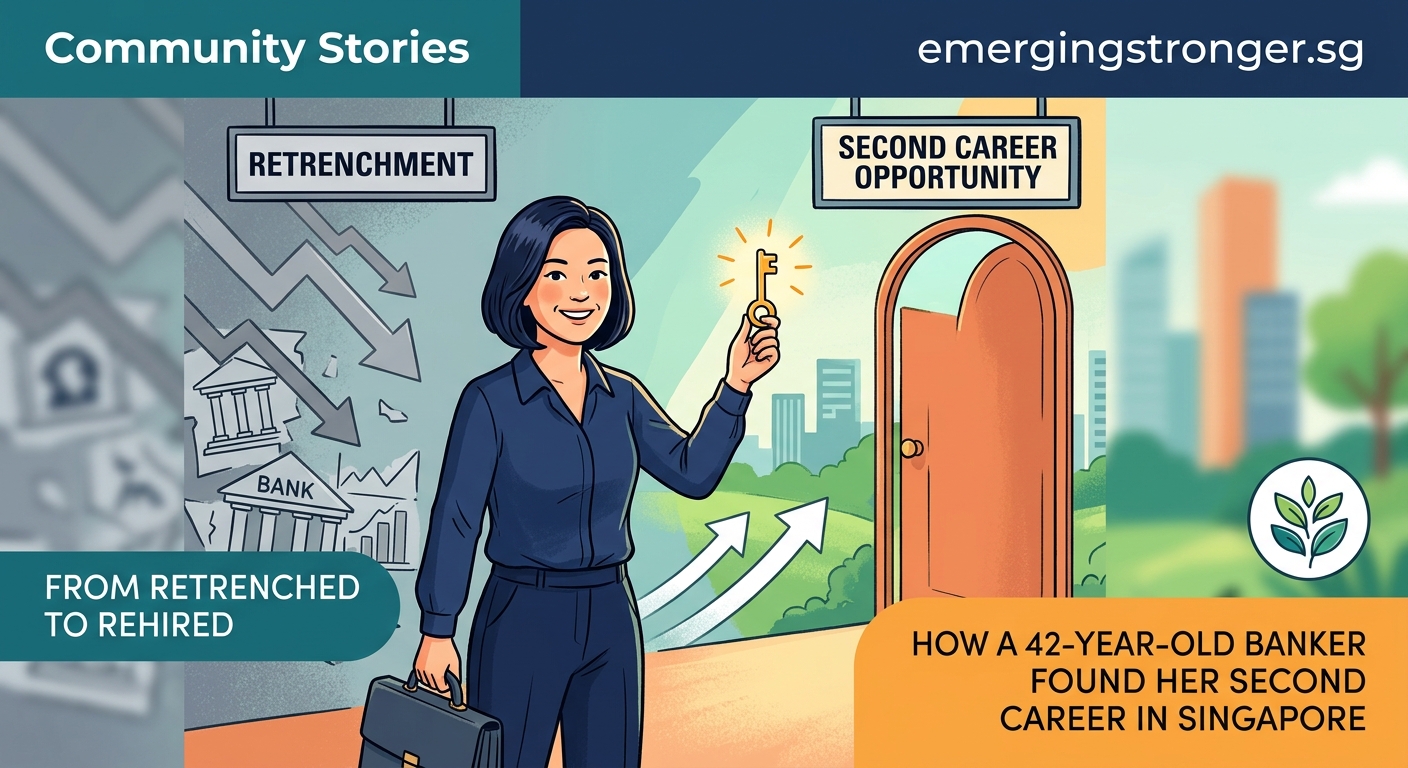
Before you start browsing job listings, you need to understand what you already bring to the table.
Transferable skills are abilities that work across different roles and industries. As someone with 15 to 20 years of work experience, you have more than you realise.
Start by listing every responsibility you’ve had in your current or recent roles. Don’t just write job titles. Write what you actually did day to day.
Did you manage budgets? That’s financial planning.
Did you coordinate between departments? That’s stakeholder management.
Did you train new staff? That’s capability development.
Did you handle difficult clients? That’s conflict resolution.
These skills matter in almost every industry. A banker who managed client relationships can transition into account management, customer success, or even sales roles in tech companies.
“The biggest mistake mid-career professionals make is undervaluing their soft skills. Technical skills can be learned in months. The ability to communicate clearly, manage pressure, and solve problems under constraints? That takes years to develop.” – Career transition coach at Workforce Singapore
Create a simple table to map your skills:
| Current skill | How I developed it | Industries where it’s valuable |
|---|---|---|
| Budget management | Handled departmental P&L for 5 years | Finance, operations, project management |
| Team leadership | Led teams of 8-12 people | Any management role across industries |
| Process improvement | Reduced processing time by 30% | Operations, consulting, business analysis |
| Client presentations | Pitched to C-level executives monthly | Sales, account management, training |
This exercise does two things. First, it builds your confidence by showing you’re not starting from zero. Second, it gives you concrete examples for interviews and resumes.
Choosing your next industry strategically
Not all career changes are equal. Some industries are growing and actively hiring mid-career professionals. Others are contracting or prefer younger candidates.
Here are sectors in Singapore that welcome experienced career changers:
- Healthcare and eldercare (growing rapidly due to aging population)
- Technology and cybersecurity (skills shortage across experience levels)
- Education and training (values real-world experience)
- Sustainability and green jobs (emerging field needs diverse backgrounds)
- Supply chain and logistics (complexity requires mature judgment)
Avoid industries that are heavily regulated with strict certification requirements unless you’re willing to spend 2-3 years retraining. For example, switching to become a doctor or lawyer at 40 is technically possible but rarely practical.
Look for roles where your existing knowledge gives you an edge. A former banker moving into fintech makes more sense than moving into graphic design, unless you have a genuine portfolio and passion for it.
Research salary expectations realistically. Most career changers take a 10-20% pay cut initially. That’s normal. The question is whether the new path offers growth potential to recover and exceed your previous salary within 3-5 years.
Building a practical transition roadmap
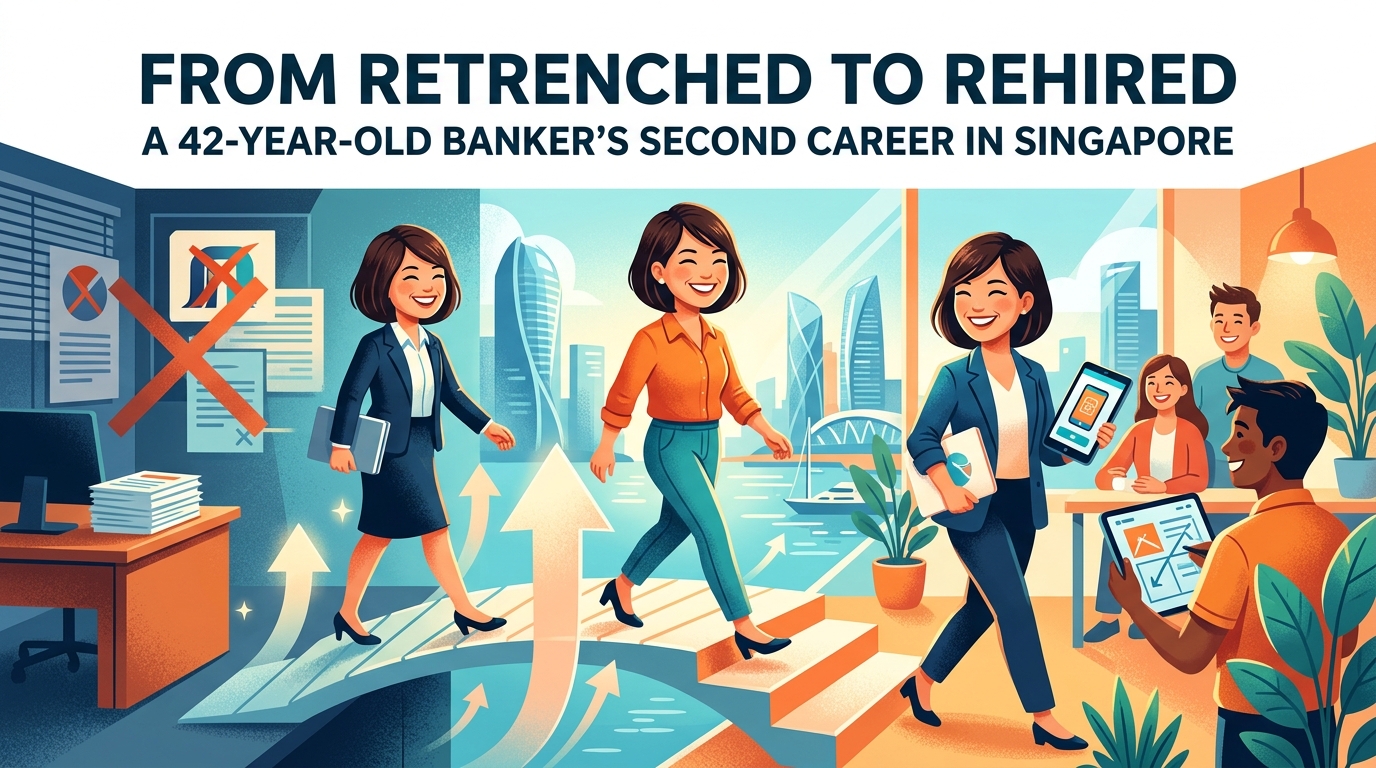
Here’s a step-by-step framework that works for most mid-career transitions:
-
Conduct informational interviews with people already in your target role. Don’t ask for jobs. Ask about their typical day, challenges they face, and skills that matter most. LinkedIn makes this easier than ever. Most people are happy to chat for 20 minutes over coffee.
-
Identify the minimum viable skills you need. You don’t need to master everything before applying. You need enough to be credible and coachable. If you’re moving into data analysis, learn Excel and SQL basics. You can pick up advanced techniques on the job.
-
Create proof of capability through projects. Employers worry that career changers can’t actually do the work. Show them you can. If you want to move into marketing, run a small campaign for a friend’s business. If you want to move into tech, build a simple app or website. Document the process and results.
-
Leverage government programmes strategically. The Career Conversion Programme (CCP) places you in a new role with structured training. Employers get wage support while you learn. This reduces their risk and increases your chances of getting hired.
-
Network within your target industry relentlessly. Attend industry events, join relevant professional associations, participate in online communities. Many jobs at this level are filled through referrals before they’re even advertised.
-
Prepare for a longer job search timeline. Career changes typically take 6-12 months from decision to new job offer. Plan your finances accordingly. Having 6 months of expenses saved removes pressure and lets you make better decisions.
Overcoming the common obstacles
Age discrimination exists. Let’s not pretend it doesn’t. Some employers worry you’ll be too expensive, too set in your ways, or won’t stay long enough to justify the investment.
Your job is to address these concerns before they become objections.
On being too expensive: be flexible on starting salary. Emphasise you’re investing in a new career path and value the learning opportunity.
On being inflexible: share specific examples of times you adapted to change, learned new systems, or changed your approach based on feedback.
On longevity: explain why this change aligns with your long-term goals. Employers want to know you’ve thought this through, not that you’re desperately grabbing at anything.
Family responsibilities often complicate transitions at this age. You might have kids in university, aging parents, or a mortgage. These are real constraints.
Be honest with yourself about what you can and cannot compromise on. If you need a certain income level to meet obligations, don’t pursue paths that can’t deliver it within a reasonable timeframe.
Consider part-time transitions if possible. Some people start freelancing or consulting in their new field while still employed, then switch full-time once they’ve built momentum.
The psychological challenge is often harder than the practical one. You might feel like you’re starting over, or that you’ve wasted years in the wrong field.
That’s not true. Every experience shapes how you think and work. Your previous career gives you perspective that someone who’s only worked in one field will never have.
If you’re struggling with the emotional weight of a major transition, mental resilience techniques can help you maintain confidence through the uncertainty.
Updating your professional brand
Your resume needs a complete rethink. The chronological format that lists every job you’ve ever had doesn’t work for career changers.
Use a hybrid format that leads with skills and achievements, then provides employment history. The first thing employers should see is what you can do, not where you’ve been.
Your LinkedIn profile matters more than ever. Recruiters search by skills, not job titles. Add skills relevant to your target role. Ask connections to endorse them. Join groups in your new industry and contribute meaningfully to discussions.
Write a LinkedIn summary that tells your transition story clearly. Don’t be vague or apologetic. Own the change.
Example: “After 15 years in banking operations, I’m transitioning into supply chain management. My experience optimising processes, managing stakeholder relationships, and working under regulatory constraints translates directly into logistics coordination. Currently completing my APICS certification and working with local manufacturers to understand their pain points.”
That’s clear, confident, and gives employers a reason to consider you.
Tapping into Singapore-specific resources
Workforce Singapore (WSG) runs career centres across the island offering free career coaching, resume reviews, and job matching services. These aren’t just for fresh graduates. The career coaches specialise in helping mid-career professionals navigate transitions.
The Adapt and Grow initiative provides personalised support including training, career coaching, and job matching. It’s designed specifically for people affected by restructuring or looking to switch sectors.
NTUC’s Employment and Employability Institute (e2i) offers similar services with a focus on union members, but many programmes are open to all Singaporeans.
Professional Conversion Programmes (PCPs) are industry-specific training programmes that place you in a new role while you learn. They exist for sectors like tech, finance, logistics, and healthcare. The government subsidises your training and the employer gets wage support.
SkillsFuture Credit can be used for thousands of courses. At 40 and above, you get the enhanced subsidy mentioned earlier. Use it strategically for skills that directly support your transition, not random courses that sound interesting.
If the stress of transition is affecting your wellbeing, free mental health services are available to help you cope.
Making the financial math work
Money is usually the biggest barrier to career change. You have bills to pay and possibly dependents relying on you.
Calculate your minimum acceptable income. This is the absolute lowest salary you can accept while still meeting essential obligations. Be ruthless about distinguishing essential from nice-to-have.
Build a transition budget. Assume your income drops by 20% for the first year in your new field. Can you manage? What expenses can you cut?
Consider these financial strategies:
- Use CPF Ordinary Account savings for approved training courses
- Apply for SkillsFuture Credit top-ups if eligible
- Look for part-time or contract work in your new field to supplement income during transition
- Negotiate a later start date with new employers to complete high-paying projects in your old field
- Delay major purchases or financial commitments until you’re established in the new role
Some people find it helpful to set a deadline. “I’ll give this transition 12 months. If I’m not employed in my new field by then, I’ll reassess.” This creates urgency without being reckless.
Learning from those who’ve done it
The banker who became a hawker gets media attention because it’s dramatic. But most successful career changes are less extreme.
The marketing manager who moved into HR.
The engineer who became a project manager.
The teacher who transitioned into corporate training.
These changes leverage existing skills while opening new possibilities. They’re achievable within 6-12 months with focused effort.
Talk to people who’ve made similar transitions. Ask them:
- What surprised you most about the new industry?
- What skills from your previous career proved most valuable?
- What do you wish you’d known before making the switch?
- How long did it take before you felt competent in the new role?
- Would you do it again?
Their answers will give you realistic expectations and help you avoid common mistakes.
Testing before you leap
You don’t have to quit your job to explore a new field.
Volunteer work lets you test industries with low commitment. Want to work in social services? Volunteer with a charity on weekends. Interested in education? Tutor students part-time.
Freelancing or consulting in your target field validates whether you actually enjoy the work. It’s one thing to imagine being a content writer. It’s another to spend evenings writing articles and realise you find it tedious.
Short courses and workshops give you a taste of new skills without committing to a full degree. Many polytechnics and private training providers offer weekend or evening classes.
Job shadowing, where you spend a day or two observing someone in your target role, provides invaluable insight. Most professionals are willing to host someone genuinely interested in their field.
These testing methods prevent expensive mistakes. Better to discover you don’t actually like data analysis after a $500 course than after quitting your job and spending $15,000 on a diploma.
Handling the interview differently
Interviewers will ask why you’re changing careers. They want to know you’re serious, not just desperate or running away from problems.
Prepare a clear, positive narrative. Focus on what you’re moving toward, not what you’re escaping from.
Weak answer: “I got retrenched and banking jobs are hard to find now.”
Strong answer: “I spent 15 years in banking operations, which taught me how to optimise complex processes under tight deadlines. I’m excited to apply those skills to supply chain management, where I can have more direct impact on product delivery and customer satisfaction.”
Address the experience gap proactively. Don’t wait for them to point out you’ve never done this exact job before.
“I know I haven’t worked in logistics before, but here’s why I believe my background prepares me well for this role…” Then give specific examples of transferable skills and relevant projects you’ve completed.
Show you’ve done your homework about the industry. Reference recent trends, challenges the sector faces, or news about their company specifically. This proves you’re genuinely interested, not just applying everywhere.
Be ready to discuss salary expectations honestly. Research typical salaries for your target role at entry and mid-level. Position yourself somewhere in between based on your transferable experience.
Your next chapter starts with one decision
Career change after 40 in Singapore isn’t easy, but it’s far from impossible. Thousands of professionals do it successfully every year, often finding more satisfaction and better work-life balance than they had before.
The key is approaching it strategically rather than desperately. Assess your skills honestly, choose your target carefully, build capabilities systematically, and leverage the support systems available to you.
You’re not too old. You’re not starting from scratch. You’re redirecting years of valuable experience toward something that aligns better with who you are now and what you want for the next chapter of your working life.
Start with one small step today. Have one informational interview. Take one relevant course. Update one section of your LinkedIn profile. Momentum builds from action, not from perfect planning.