
You’re making breakfast for your teenage daughter while checking your phone for messages from the nursing home about your father’s medication. Your son needs help with his PSLE revision. Your mother just called about a doctor’s appointment. Your boss wants that report by noon.
This is the reality for Singapore’s sandwich generation.
The sandwich generation faces unique pressures caring for aging parents while supporting children. Success requires setting boundaries, building support systems, managing finances strategically, and prioritising self-care. This guide provides actionable frameworks to balance dual caregiving responsibilities while maintaining your wellbeing, with Singapore-specific resources and practical recovery strategies for overwhelmed caregivers.
Understanding the sandwich generation reality in Singapore
The term describes adults caught between two generations needing care.
You’re not alone. Studies show that one in three Singaporeans aged 40 to 65 provides care for both parents and children simultaneously. The number keeps growing as life expectancy increases and family sizes remain small.
The pressure feels different here. Singapore’s high cost of living adds financial strain. Limited space means multi-generational living arrangements become complex. Cultural expectations around filial piety create guilt when you consider external care options.
Many sandwich caregivers report feeling invisible. Your children see you as the provider. Your parents see you as their support system. Your employer sees you as a professional. But who sees you as a person who also needs care?
The emotional toll compounds over time. Physical exhaustion becomes chronic. Mental health suffers. Relationships strain under the weight of constant demands.
But there are ways forward. Practical strategies exist that work within Singapore’s unique context. The key is building systems that support you while you support others.
Recognising the warning signs before burnout hits
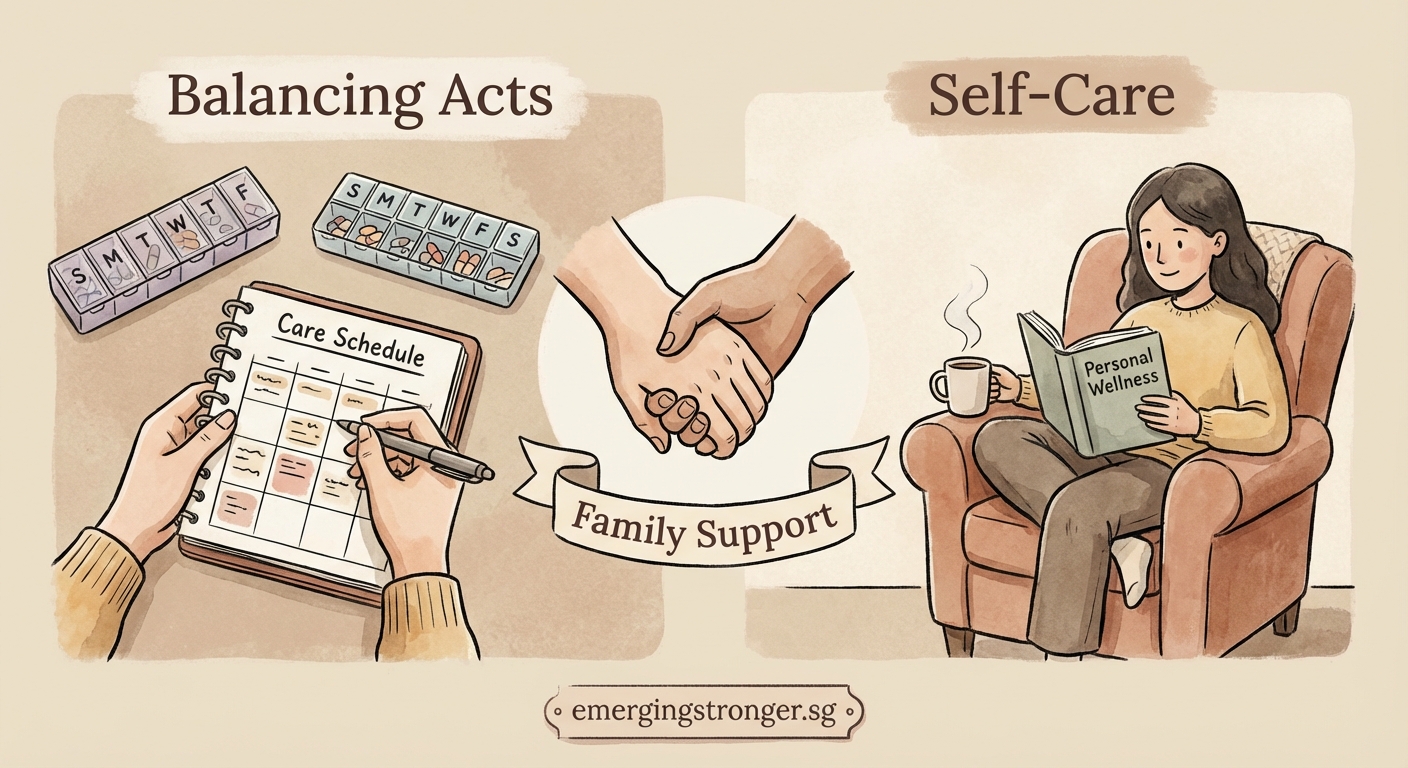
Your body sends signals before complete collapse.
Physical symptoms appear first. You catch every bug your kids bring home. Sleep becomes elusive even when you have the chance. Headaches become your constant companion. Your back aches from lifting your parent or carrying groceries.
Emotional signs follow. You snap at your spouse over small things. Resentment builds towards family members. Guilt consumes you when you take any time for yourself. Joy feels like a distant memory.
Cognitive changes emerge. You forget appointments. Decision-making becomes overwhelming. Concentration at work suffers. Simple tasks feel impossibly complex.
“The most dangerous moment for caregivers is when they believe they can handle everything alone. Asking for help isn’t weakness. It’s wisdom.” (Community counsellor, Singapore Family Service Centre)
Social withdrawal happens gradually. You cancel plans with friends. Hobbies disappear. Your world shrinks to work, caregiving, and sleep.
Financial stress intensifies everything. Medical bills pile up. Enrichment classes for kids compete with nursing care costs. Your own retirement savings stagnate while current needs drain resources.
Recognising these patterns early makes intervention possible. Waiting until crisis hits limits your options and damages your health irreparably.
Building your caregiving support ecosystem
No one successfully manages dual caregiving alone.
Start with family conversations. Gather siblings for honest discussions about parent care. Document who can contribute what, whether time, money, or specific tasks. Put agreements in writing to prevent misunderstandings later.
Your children can help more than you think. Age-appropriate tasks teach responsibility while lightening your load. Teenagers can prepare simple meals. Primary school children can sort laundry or help grandparents with technology.
Professional support fills critical gaps. Consider these options:
- Home nursing services for medical care needs
- Domestic helpers trained in elder care
- Adult daycare centres providing structured activities
- Meal delivery services reducing daily cooking burden
- Online tutors supplementing children’s education
Community resources offer practical assistance. Many Singaporean organisations provide caregiver support:
- Agency for Integrated Care connects you with community care services.
- Silver Generation Office offers advice on elder care programmes.
- Family Service Centres provide counselling and financial assistance.
- Caregiver support groups create spaces for shared experiences.
Workplace flexibility matters enormously. Discuss arrangements with your employer. Many companies now offer flexible hours, work-from-home options, or caregiver leave. The Singapore government’s Extended Child Care Leave and Eldercare Leave provide legal frameworks supporting your needs.
Technology streamlines coordination. Shared family calendars track medical appointments and school events. Medication reminder apps prevent missed doses. Video calls keep distant relatives involved.
Financial planning requires professional input. A financial adviser helps balance immediate caregiving costs against long-term retirement needs. CPF schemes like CareShield Life provide insurance against severe disability costs.
Finding your support network becomes essential during overwhelming periods. The right connections make impossible situations manageable.
Creating sustainable daily routines that actually work
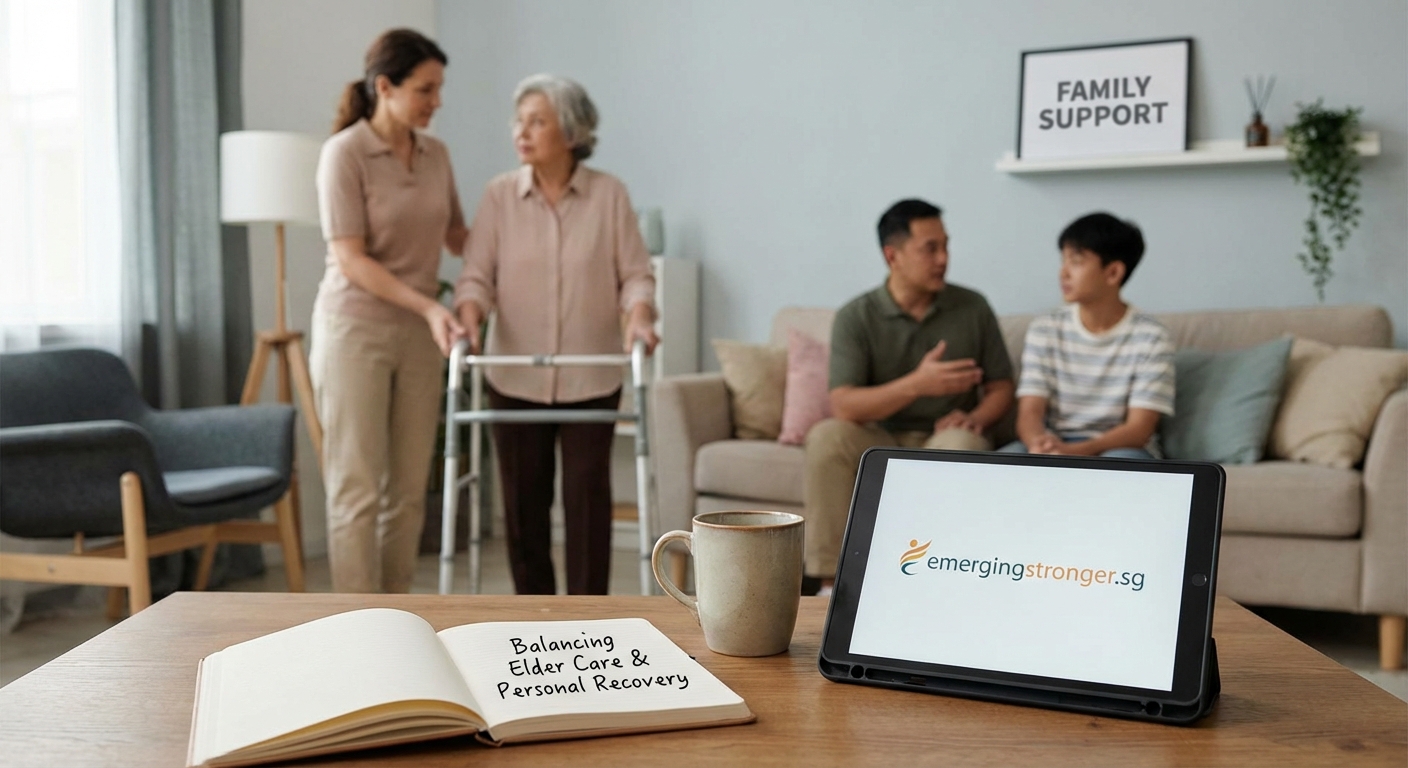
Structure prevents chaos when demands multiply.
Design your morning routine first. Wake 30 minutes before anyone else needs you. This buffer provides mental preparation time. Use it for coffee, stretching, or simply sitting in silence.
Batch similar tasks together. Prepare multiple meals during one cooking session. Schedule all medical appointments on the same day when possible. Handle administrative tasks in dedicated blocks rather than scattered throughout the day.
Time-blocking protects priorities. Assign specific hours for work, caregiving, and personal time. Communicate these boundaries clearly to everyone involved. Your children learn to respect your work hours. Your parents understand when you’re available.
| Time Block | Activity | Boundary Strategy |
|---|---|---|
| 6:00-7:00am | Personal time | Door closed, phone silent |
| 7:00-9:00am | Family morning routine | Delegated tasks, shared responsibility |
| 9:00am-6:00pm | Work focus | Emergency-only interruptions |
| 6:00-8:00pm | Evening caregiving | Prepared meals, structured activities |
| 8:00-10:00pm | Family connection | Quality over quantity time |
Meal planning saves enormous mental energy. Create a rotating two-week menu. Shop once weekly. Prep ingredients on weekends. Simple, nutritious meals beat elaborate cooking that drains you.
Transportation logistics need systematic solutions. Coordinate medical appointments near your workplace. Arrange carpools for children’s activities. Use grab or taxi services when juggling multiple locations becomes impossible.
Sleep becomes non-negotiable. Protect seven hours minimum. Everything falls apart without adequate rest. If overnight caregiving disrupts sleep, arrange respite care or share night duties with family members.
Building emotional armor helps maintain consistency when stress peaks. Small daily practices compound into significant resilience over time.
Managing the financial squeeze strategically
Money stress amplifies every other caregiving challenge.
Track all caregiving expenses meticulously. Medical costs, transport, meals, help services, medications, and equipment add up faster than expected. Documentation helps with tax relief claims and family discussions.
Government schemes reduce financial burden significantly:
- Seniors’ Mobility and Enabling Fund (SMF) subsidises assistive devices
- Foreign Domestic Worker Grant provides monthly support
- ElderShield and CareShield Life cover severe disability care costs
- Intermediate and Long-Term Care services offer subsidised nursing care
- Pioneer Generation and Merdeka Generation packages provide healthcare subsidies
CPF serves multiple purposes. MediSave covers approved medical treatments. Special arrangements allow CPF transfers for parent care. Understanding these mechanisms prevents unnecessary out-of-pocket expenses.
Insurance review becomes essential. Ensure adequate coverage for yourself, your parents, and your children. Gaps in coverage create catastrophic financial risk. Integrated Shield Plans reduce hospitalisation costs substantially.
Income protection matters equally. Your ability to earn supports everyone. Disability insurance, critical illness coverage, and life insurance protect your family if you cannot work.
Children’s education costs need realistic planning. Balance enrichment activities against caregiving expenses. Government schools provide excellent education without private school fees. Tuition should supplement, not replace, parental involvement.
Retirement savings cannot stop completely. Even small regular contributions maintain momentum. Compound interest needs time to work. Completely sacrificing your retirement creates future dependency on your own children.
Building a six-month emergency fund provides crucial buffer when unexpected caregiving costs arise. Financial resilience prevents crisis decisions.
Protecting your mental health through the caregiving journey
Your emotional wellbeing determines everything else.
Regular mental health check-ins matter. Monthly self-assessment helps catch problems early. Rate your stress, sleep quality, mood, and coping ability honestly. Declining scores signal intervention needs.
Professional counselling provides invaluable support. Many Singaporeans resist therapy due to stigma. This resistance costs you dearly. Counsellors offer objective perspectives, coping strategies, and emotional validation.
Free mental health services in Singapore make professional support accessible regardless of budget. Community resources exist specifically for caregivers.
Stress management techniques need daily practice:
- Deep breathing exercises during transitions between tasks
- Brief mindfulness practices while commuting
- Physical movement, even short walks around the block
- Journaling to process complex emotions
- Creative outlets providing mental escape
Social connections prevent isolation. Maintain friendships despite time constraints. Coffee with a friend provides perspective. Support groups connect you with people facing similar challenges. Online communities offer flexibility when leaving home proves difficult.
Guilt management requires active work. You cannot be everything to everyone simultaneously. Good enough parenting beats perfect parenting. Adequate elder care beats martyrdom. Your children need a functional parent more than a perfect one.
Permission to feel negative emotions matters. Resentment, frustration, and anger are normal responses to overwhelming situations. Acknowledging these feelings prevents them from controlling your behaviour.
Self-compassion counters the harsh inner critic. Speak to yourself as you would a friend facing similar circumstances. You’re doing your best in impossible situations. That deserves recognition, not criticism.
Mental resilience techniques build capacity to handle ongoing stress. Resilience isn’t about never struggling. It’s about recovering when you do.
Navigating family dynamics and difficult conversations
Caregiving exposes every family dysfunction.
Sibling conflicts around parent care need direct address. Unequal contribution breeds resentment. Schedule family meetings to discuss responsibilities, expectations, and concerns. Use a mediator if direct conversation proves impossible.
Common caregiving conflicts and solutions:
| Conflict | Underlying Issue | Resolution Strategy |
|---|---|---|
| Unequal sibling contribution | Different life circumstances | Document time/money contributions objectively |
| Parent resistance to help | Fear of losing independence | Involve doctor in conversations about safety |
| Spouse resentment | Feeling neglected | Schedule protected couple time weekly |
| Children acting out | Sensing parent stress | Age-appropriate conversations about situation |
| Financial disagreements | Different priorities | Professional financial mediation |
Boundaries with parents prove especially challenging. Cultural expectations around filial piety complicate limit-setting. But boundaries protect relationships long-term. You can honour your parents while maintaining your own wellbeing.
Communication with aging parents requires patience. Cognitive decline affects understanding. Repeat information calmly. Use written notes for important details. Involve them in decisions about their care when possible.
Your children need age-appropriate explanations. Teenagers understand caregiving complexities. Young children need simpler reassurance. Hiding stress completely backfires. Children sense tension and imagine worse scenarios than reality.
Spousal relationships require active protection. Caregiving stress destroys marriages when partners stop prioritising each other. Weekly date nights, even at home after everyone sleeps, maintain connection. Regular check-ins about relationship health prevent drift.
Extended family involvement needs clear parameters. Well-meaning relatives offering advice without helping create additional stress. Thank them for concern, then redirect conversation. Those willing to help get specific task assignments.
Teaching resilience to your children turns caregiving challenges into learning opportunities. Children who see parents handling adversity develop stronger coping skills themselves.
Making difficult decisions about care arrangements
Eventually, home care may become insufficient.
Recognising this point requires honest assessment. Safety concerns, medical complexity, or your own health breakdown signal transition needs. Delaying necessary changes often leads to crisis situations with fewer options.
Nursing home considerations in Singapore:
- Research facilities thoroughly before emergencies force rushed decisions.
- Visit multiple locations to compare environments and care quality.
- Understand cost structures and available subsidies completely.
- Involve your parent in the decision when cognitive ability allows.
- Prepare emotionally for guilt feelings regardless of necessity.
Day care centres provide middle-ground solutions. Your parent receives structured activities and social interaction. You get respite during work hours. Medical supervision addresses health needs without full residential care.
Foreign domestic helper arrangements require careful management. Proper training in elder care makes enormous difference. Clear job scope prevents misunderstandings. Regular supervision ensures quality care. Remember that helpers need rest days and reasonable working conditions.
Moving parents into your home needs realistic planning. Space requirements, bathroom accessibility, and privacy concerns matter. Multi-generational living works for some families but creates unbearable tension for others. Cultural expectations shouldn’t override practical considerations.
Respite care provides temporary relief. Short-term residential placement allows you to recharge. Many caregivers resist this option due to guilt. But preventing your own breakdown serves everyone better than pushing until crisis.
End-of-life planning conversations happen before emergencies. Advanced care planning documents your parent’s wishes. Lasting Power of Attorney ensures someone can make decisions if they cannot. These discussions feel uncomfortable but prevent family conflicts later.
Recognising when you need to reset prevents complete collapse. Sometimes the most responsible caregiving decision involves changing arrangements.
Practical coping strategies for overwhelming moments
Bad days happen despite best planning.
Develop a crisis response toolkit. Keep a list of people to call for emergency help. Maintain backup plans for childcare and parent care. Know which tasks can be postponed and which cannot. Having predetermined responses prevents paralysis during overwhelming moments.
Immediate stress relief techniques:
- 4-7-8 breathing: inhale four counts, hold seven, exhale eight
- Cold water on wrists and face activates calming response
- Progressive muscle relaxation releases physical tension
- Five senses grounding: name five things you see, four you touch, three you hear, two you smell, one you taste
- Brief outdoor exposure changes mental state
Permission to lower standards becomes essential. Dinner can be simple sandwiches. The house can be messy. Children can watch extra screen time. Your parent can wear the same outfit two days running. Survival mode has different rules than normal life.
Micro-breaks throughout the day prevent complete depletion. Two minutes of deep breathing. Five minutes sitting with tea. Ten minutes reading something unrelated to caregiving. These tiny pauses accumulate into meaningful recovery.
Saying no protects limited resources. Additional commitments drain capacity needed for essential responsibilities. Decline volunteer requests, social obligations, and extra work projects without guilt. Your plate is full.
Celebrate small wins. You got everyone fed. Medical appointments happened. No one ended up in emergency. These count as victories during sandwich generation years. Acknowledge your competence instead of focusing on shortfalls.
Bad days don’t erase progress. One difficult day doesn’t mean your systems failed. Sustainability means overall functionality, not perfection. Tomorrow offers another chance.
Evidence-based breathing techniques provide immediate relief during acute stress. Simple practices create measurable physiological changes.
Building long-term sustainability into your caregiving approach
Marathon pacing beats sprint exhaustion.
Regular system reviews prevent gradual deterioration. Quarterly assessment of what’s working and what isn’t allows course correction. Family meetings review responsibilities and adjust as situations change. Proactive adjustment prevents crisis-driven changes.
Anticipate transitions before they arrive. Your parent’s care needs will increase. Your children’s independence will grow. Your own energy will fluctuate. Planning for predictable changes reduces shock when they occur.
Invest in your own health now. Regular exercise, adequate sleep, nutritious food, and preventive medical care protect your ability to continue caregiving. Your health enables everything else. Neglecting it creates cascading failures.
Maintain career development despite caregiving demands. Complete stagnation damages long-term financial security and self-identity. Small continued growth, even if slower than pre-caregiving pace, maintains momentum. Online courses, certifications, and skill development fit constrained schedules.
Preserve relationships outside caregiving roles. You are more than a caregiver, parent, and employee. Hobbies, friendships, and personal interests sustain your sense of self. Completely losing yourself in caregiving roles damages everyone long-term.
Financial planning extends beyond immediate needs. Retirement still comes. Your children will need education funding. Your own potential future care needs require consideration. Balanced planning addresses multiple timeframes simultaneously.
Building a personal growth plan maintains forward momentum despite caregiving constraints. Growth looks different during intense caregiving years but shouldn’t stop completely.
When caregiving becomes a catalyst for personal growth
Difficult circumstances reveal unexpected strengths.
Many sandwich generation caregivers discover capabilities they never knew they possessed. You learn medical terminology. You develop negotiation skills. You become an expert in government schemes and community resources. You master logistics that would impress military planners.
Resilience builds through challenge, not comfort. The coping strategies you develop serve you throughout life. Problem-solving abilities strengthen. Emotional regulation improves. Perspective shifts toward what truly matters.
Your children witness your character under pressure. They learn that family members care for each other. They see commitment demonstrated through action. They observe healthy boundary-setting and self-care. These lessons shape their own approaches to future challenges.
Relationships deepen through shared adversity. Siblings who coordinate parent care often reconnect. Spouses who support each other through caregiving build stronger partnerships. Children who help with grandparent care develop empathy and maturity.
Why some people bounce back faster relates directly to mindset about challenges. Viewing caregiving as growth opportunity rather than pure burden changes the experience fundamentally.
Purpose and meaning emerge from service. Contributing to parent comfort and children’s wellbeing creates deep satisfaction despite difficulty. Years later, most caregivers report pride in having shown up during family need.
The sandwich generation experience, while exhausting, often becomes a defining period of personal development. The person who emerges from these years possesses strength, wisdom, and resilience that easier paths never develop.
Your caregiving journey deserves support and recognition
The sandwich generation carries an enormous load.
You’re managing responsibilities that previous generations split among larger families. You’re doing it while maintaining careers in Singapore’s demanding work environment. You’re navigating systems and making decisions that feel impossibly complex.
This is hard work. It deserves acknowledgment.
You don’t need to be perfect. You need to be sustainable. Systems that support you enable you to support others. Boundaries protect relationships. Self-care isn’t selfish. It’s essential.
The strategies in this guide work when implemented consistently. Start with one or two changes rather than attempting everything simultaneously. Small improvements compound into significant quality of life increases.
Singapore families building stronger bonds during challenging periods often emerge more connected than before. Your caregiving journey, while difficult, creates opportunities for deeper relationships and personal growth.
You’re not alone in this experience. Thousands of Singaporeans navigate similar challenges daily. Resources exist to support you. Community understands your struggle. Help is available when you’re ready to accept it.
The sandwich generation years eventually end. Your children grow independent. Your parent care responsibilities change. You emerge from this period with capabilities and wisdom that serve you the rest of your life.
Take care of yourself while you care for others. Your wellbeing matters just as much as theirs.