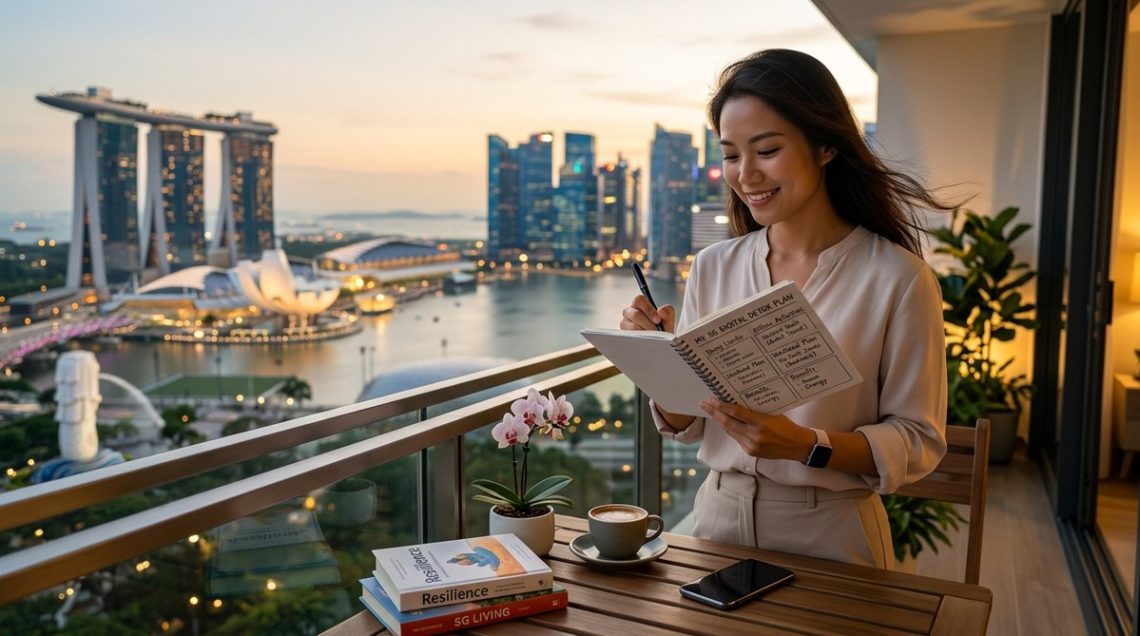
You check your phone before getting out of bed. You scroll through WhatsApp messages while waiting for your kopi at the hawker centre. You reply to work emails during your MRT commute. You open Instagram while the microwave beeps. By the time you get home, your brain feels like it has run a marathon. This is not a personal failing. This is life in Singapore in 2026, where the always connected lifestyle is the default setting for most professionals.
The good news is that a digital detox does not mean throwing your phone into the nearest drain. It means building a plan that respects your actual life. Let us walk through a framework that works with your Singapore lifestyle, not against it.
A sustainable digital detox plan in Singapore focuses on small, consistent boundaries rather than extreme disconnection. By auditing your screen use, setting non-negotiable offline periods, and replacing mindless scrolling with intentional activities, you can reduce anxiety and reclaim focus without compromising your career or social life.
Why Your Previous Attempts at a Digital Detox Failed
You probably tried to quit social media cold turkey before. It lasted maybe a weekend. Then Monday arrived, and you needed to check work messages, respond to your child’s school group chat, or confirm dinner plans with friends. The truth is that a complete digital blackout is unrealistic for most people in Singapore.
The problem is not willpower. The problem is the plan itself. Most digital detox advice comes from a place that assumes you have control over your schedule. In Singapore, your phone is your work tool, your bank, your transport pass, and your social organiser all at once. You cannot simply switch it off.
What works instead is a targeted approach. You identify the specific behaviours that drain your energy and replace them with ones that restore it. This is not about cutting screen time to zero. It is about cutting the bad screen time and keeping the rest.
The Three Layer Audit: Know Where Your Time Goes
Before you change anything, you need data. Spend three days tracking your phone use. Most smartphones have a built in screen time tracker. Use it. Do not judge yourself. Just observe.
Categorise your screen time into three layers:
- Essential use: Work messages, GPS navigation, banking, paying at hawker stalls, calling Grab, checking MRT schedule.
- Social connection: WhatsApp groups with family or close friends, video calls with overseas relatives, planning meetups.
- Mindless consumption: Scrolling Instagram reels, watching TikTok videos, browsing Shopee without buying anything, checking news apps repeatedly.
The goal is to protect the first two layers and reduce the third. Most people find that mindless consumption takes up 40 to 60 percent of their total screen time. That is where the real savings live.
The 5 Step Digital Detox Plan for Singapore Professionals
Here is a numbered framework that respects your work and social obligations while cutting out the noise.
-
Identify your peak distraction hours. Look at your screen time data. When do you scroll the most? For many people in Singapore, it is during the evening wind down, right before sleep, or during the morning commute. Pick one window to target first.
-
Set a single boundary for that window. Do not try to change everything at once. If your worst time is 10pm to 11pm, commit to putting your phone in another room during that hour. If your worst time is the MRT ride, delete your two most used social apps from your phone. You can reinstall them when you get home.
-
Replace the behaviour with something specific. This is the step most people skip. If you just stop scrolling, you will feel bored and reach for the phone again. Have an alternative ready. Read a physical book. Listen to a podcast. Stare out the window. Write in a journal. The replacement must be as easy as the original habit.
-
Create friction for bad habits. Make it harder to access mindless content. Log out of social media accounts after each use. Turn off all non-essential notifications. Remove your credit card details from shopping apps so you have to type them in each time. Friction reduces impulse behaviour dramatically.
-
Review and adjust every Sunday. Spend five minutes checking your screen time data for the week. Celebrate what worked. Adjust what did not. This is not about perfection. It is about steady improvement.
What to Do Instead of Scrolling: A Bulleted List of Singapore Specific Replacements
Instead of reaching for your phone during a free moment, try one of these:
- Walk to the nearest kopitiam and order a drink without looking at your phone
- Sit at a park connector bench and watch people walk by
- Write a physical letter to a family member
- Practice a breathing exercise using the 7 Evidence-Based Breathing Techniques Singapore Professionals Use to Manage Workplace Stress
- Do a short stretching routine at your desk
- Read a chapter from a physical book you borrowed from the library
- Call a friend instead of texting them
- Cook a meal without watching a video at the same time
The key is that these activities do not require a screen. They give your brain a real break.
Common Mistakes vs Smart Strategies: A Comparison Table
| Common Mistake | Why It Fails | Smart Strategy |
|---|---|---|
| Deleting all social media at once | You feel isolated and reinstall within days | Remove only the apps that cause mindless scrolling; keep messaging apps |
| Going phone free for a full weekend | You miss important messages and feel anxious | Start with one phone free hour per day |
| Relying only on willpower | Willpower runs out by Wednesday | Use friction techniques like app timers and greyscale mode |
| Not telling anyone | Friends wonder why you are not replying | Let close friends and family know you are reducing screen time |
| Expecting to feel great immediately | Withdrawal symptoms cause irritability | Accept that the first week will feel uncomfortable |
| Trying to do it alone | No accountability | Join a friend or use a Finding Your Support Network: Where Singaporeans Turn When Things Fall Apart |
The Weekend Reset: A Practical Micro Detox
If you want a more intensive reset, try a weekend micro detox. This is not a full digital blackout. It is a structured break that still allows essential use.
On Saturday morning, disable all social media apps and news apps. Keep your messaging apps active so you can coordinate with family. Keep your work email off. Spend the weekend doing activities that do not involve a screen. Visit a park. Go for a hike at MacRitchie. Visit the library at Bugis. Have a long meal with family without any phones on the table.
By Sunday evening, you will notice something. Your mind will feel quieter. You will have had more real conversations. You will sleep better. Use that feeling as motivation for the week ahead.
“The goal of a digital detox is not to punish yourself. It is to remind your brain that life exists beyond the screen. When you take a break, you give your mind space to process, rest, and reset.” This advice comes from Dr. Lim, a clinical psychologist based in Singapore who works with corporate clients on digital wellness.
How to Handle Work Related Screen Time
This is the hardest part for most professionals. You cannot ignore your work messages. But you can manage them better.
Turn off all non urgent notifications. Slack, Teams, and email can wait. Set specific times to check work messages. For example, check once at 10am, once at 2pm, and once at 4pm. Outside those windows, close the apps. Let your colleagues know you are doing this. Most people will respect it.
If your job requires constant availability, talk to your manager about setting boundaries. Many companies in Singapore are becoming more aware of burnout and digital fatigue. You might be surprised by the support you receive.
If you are currently recovering from a career setback, a digital detox can be especially powerful. It frees up mental energy for rebuilding. Read about How Singaporeans Are Rebuilding Their Careers After Setbacks in 2026 for more context.
Using Technology to Fight Technology
You do not have to fight alone. Use apps that help you control your phone use. Here are a few that work well in Singapore:
- Forest: A focus timer app that helps you stay off your phone during work hours
- One Sec: Forces you to wait before opening social media apps
- Freedom: Blocks distracting websites across all your devices
- Apple and Android native focus modes: Schedule do not disturb periods automatically
Use these tools to support your goals, not replace your own decision making. They are training wheels, not a permanent solution.
The Role of Nature and Movement in Your Detox
Singapore has incredible green spaces that are perfect for a digital detox. Use them. Head to the Botanic Gardens on a Sunday morning. Walk the Rail Corridor. Visit Coney Island. Go to East Coast Park and sit on the sand.
When you are in nature, your brain naturally calms down. The constant dopamine hits from notifications stop. You can think clearly. This is not optional. It is a core part of the detox process.
For a deeper look at how nature helps recovery, read Can Nature Therapy Help You Recover from Burnout? A Guide to Singapore’s Healing Green Spaces.
What to Expect in the First 30 Days
The first week will feel uncomfortable. You will reach for your phone out of habit. You will feel anxious. That is normal. Push through it.
By week two, the cravings will start to fade. You will notice how much more time you have. You will start having better conversations. Your sleep will improve.
By week three, the new habits will feel automatic. You will no longer think about checking your phone during dinner. You will feel more present.
By week four, you will have built a sustainable routine. You will know exactly which boundaries work for you and which ones need adjustment. You will feel more in control of your time and attention.
Your Digital Detox Is a Form of Resilience
Reducing screen time is not just about productivity. It is about building mental strength. When you stop letting notifications control your attention, you build the skill of focus. When you sit with boredom instead of reaching for your phone, you build the skill of patience. When you choose a walk over scrolling, you build the skill of intentional living.
These skills are the foundation of resilience. They help you handle stress, setbacks, and uncertainty. They prepare you for the challenges that life in Singapore throws at you.
If you want to go deeper into building these skills, check out Building Emotional Armor: A 30-Day Resilience Challenge for Busy Professionals.
Start Tomorrow Morning
Do not wait for a perfect moment. Start tomorrow. When you wake up, do not pick up your phone for the first 30 minutes. Let your brain wake up naturally. Have your breakfast without a screen. Walk to the MRT without headphones.
That single change will set the tone for your entire day. From there, add one more boundary each week. Within a month, you will have built a digital detox plan that actually works for your Singapore lifestyle. You will feel lighter, more focused, and more in control. And you will wonder why you did not start sooner.