You poured everything into your business. The late nights at the hawker centre planning, the early mornings answering emails from your HDB flat, the pride when you signed your first commercial lease in a JTC industrial estate. And now it is gone. The creditors are calling. The ACRA filing is a reminder of what you lost. The silence from former clients feels heavier than any argument.
That hollow feeling in your chest is real. But here is the truth no one tells you: a business collapse in Singapore does not define your future. It refines your next move. The founders who eventually thrive are not the ones who never failed. They are the ones who followed intentional business recovery steps after the dust settled.
This guide is for you, the Singapore entrepreneur who is ready to rebuild. Not with blind optimism, but with a clear, localised plan that addresses your debt, your legal obligations, your mental health, and your next venture.
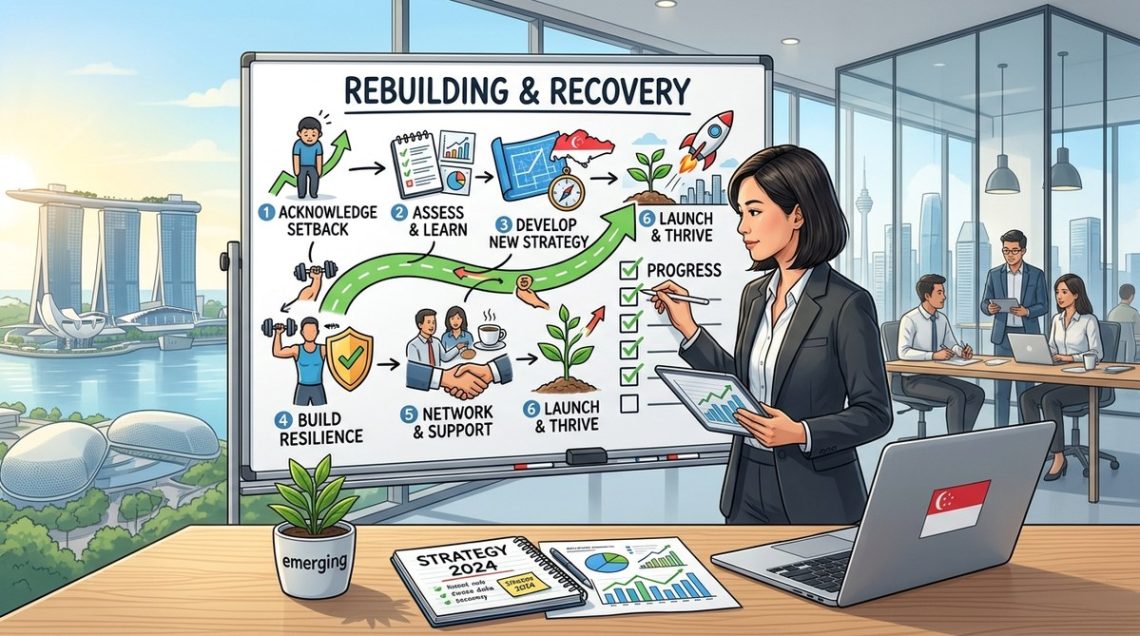
Recovering from a business collapse requires six deliberate actions: stabilising your cash flow, resolving legal liabilities, restoring your credit score, rebuilding your professional network, strengthening your mental resilience, and launching a leaner venture. Each step is grounded in Singapore’s regulatory and financial landscape, giving you a realistic path forward without sugarcoating the effort involved.
Step 1: Stabilise Your Personal and Business Cash Flow
When your business collapses, your personal finances often take the first hit. You may have used personal credit cards, pledged your CPF OA savings, or taken a bank loan under your own name. The first recovery step is to stop the bleeding.
Start by listing every outstanding obligation. Separate them into two categories: business debts (suppliers, B2B contracts, office rent) and personal debts (credit cards, personal loans, director’s loans). This clarity helps you negotiate from a position of honesty.
Contact your bank or creditor immediately. In 2026, many financial institutions in Singapore offer debt restructuring programmes for distressed entrepreneurs. Ask about reduced interest rates or extended repayment tenures. Do not hide from the calls. Creditors in Singapore respect a proactive borrower more than one who disappears.
If you have a personal guarantor on your business loans, that person needs to know your situation. It is uncomfortable, but transparency preserves relationships that you will need later.
For your immediate living expenses, consider these options:
- Tap into the Community Development Council (CDC) vouchers if you qualify for short term relief.
- Use your remaining cash strictly for essentials: rent, food, transport, and basic medical needs.
- Put business expenses on hold unless they generate immediate income.
| Action | Why It Matters in Singapore |
|---|---|
| Call your bank’s hardship team | Many local banks have dedicated units for SME owners in distress |
| Apply for debt consolidation | Reduces monthly outgoings and prevents default interest from compounding |
| Freeze non essential subscriptions | Every dollar saved is a dollar you can use to negotiate a fresh start |
Step 2: Resolve Your Legal and Regulatory Obligations
Singapore’s regulatory framework is strict, but it also provides structured exit paths. Ignoring your ACRA filing obligations or your IRAS tax submissions will only make recovery harder.
If you have not already done so, formally wind up your company. You have two main routes:
- Strike off if your company has no liabilities and all shareholders agree.
- Creditors’ voluntary liquidation if debts exist and you cannot pay them.
Engage a licensed insolvency practitioner. The cost of professional advice upfront is far lower than the penalties for wrongful trading or failing to file annual returns.
For tax matters, approach IRAS early. They offer instalment payment plans for outstanding corporate tax. Show them your recovery plan. They have seen many entrepreneurs in your position and prefer cooperation over enforcement.
“The entrepreneurs who recover fastest are the ones who face their legal obligations head on. Hiding from ACRA or IRAS only delays the healing process. Clear the paperwork, and you clear your mind for the next chapter.” Kenneth Tan, insolvency practitioner with 18 years of experience in Singapore
If you are unsure where to begin, read our guide on where to find free legal advice for personal and business recovery in Singapore.
Step 3: Restore Your Credit Score and Financial Reputation
A collapsed business often leaves a damaged credit report. In Singapore, your credit score is maintained by the Credit Bureau of Singapore (CBS). A low score can block you from future business loans, housing loans, or even rental applications.
Rebuilding your score takes patience, but it is possible. Here is how:
- Pay every bill on time, even if it is the minimum amount.
- Keep your credit card utilisation below 30 percent.
- Do not apply for multiple credit lines at once. Each application triggers a hard inquiry.
If you have defaulted on a loan, negotiate a settlement letter with your creditor. A “paid settled” status is better than an outstanding default. Over time, the impact of the default decreases as you demonstrate responsible borrowing.
For a deeper look at this process, check out our article on rebuilding your credit score after financial setbacks: a Singapore guide.
Step 4: Rebuild Your Professional Network Without Shame
After a business failure, the instinct is to hide. You avoid networking events at Suntec City. You skip the industry WhatsApp groups. You delete LinkedIn for weeks.
Resist that urge. Your network is your lifeline.
Start with the people who know your work ethic. Former employees, trusted suppliers, and even past clients may still respect your skills even if the business model failed. Reach out individually. Say something honest: “My business did not survive, but I am planning my next move. I would value your advice.”
You will be surprised by how many people in Singapore’s business community have faced similar setbacks. The local startup ecosystem is small enough that reputations travel, but forgiving enough to reward courage.
Attend one low pressure event per month. A breakfast talk at the Singapore Business Federation, a workshop at Action Community for Entrepreneurship (ACE), or even a casual coffee chat at a Tiong Bahru cafe. The goal is not to pitch. The goal is to reconnect.
For more on this, read about finding your support network: where Singaporeans turn when things fall apart.
Step 5: Strengthen Your Mental Health and Resilience
You cannot rebuild a business if you are emotionally drained. The shame, the anxiety, the sleepless nights at your parents’ flat while wondering how to tell them you failed again. These are not signs of weakness. They are signs that you care.
Singapore offers accessible mental health support for entrepreneurs. The National CARE Hotline (1800 202 6868) is free and confidential. Many polyclinics now offer subsidised counselling sessions. If you prefer digital support, apps like Intellect and SoulCare have programmes tailored for high stress professionals.
Consider this: the same grit that made you start a business in the first place is the grit that will help you recover. But grit without rest leads to burnout. You need to actively rebuild your emotional reserves.
Here are a few practices that work well for busy Singapore entrepreneurs:
- Morning journaling: Write three things you are grateful for, even if they are small (kopi from your favourite stall, a supportive text from a friend).
- Boundaries on news consumption: Limit doom scrolling about the economy. It does not help.
- Weekly check ins with a mentor: Find someone who has been through a collapse before.
For more strategies, read about 5 mental resilience techniques every Singaporean professional should master.
Step 6: Launch a Leaner, Smarter Venture
When you are ready to start again, do not repeat the same mistakes. The most common reasons Singapore businesses fail include poor cash flow management, over reliance on a single client, and underestimating operating costs in a high rent environment.
Start with a side hustle before committing to a full time venture. This reduces financial pressure and lets you test your idea without risking your savings. Singapore’s gig economy and digital platforms make this easier than ever.
Consider these lean startup approaches:
- Use a virtual office instead of signing a lease in a CBD building.
- Outsource accounting and legal work to freelance professionals.
- Validate your product with a minimum viable product (MVP) before investing in inventory.
If you need side income while you plan, read about 7 side income streams Singapore professionals can start this month.
Common Recovery Mistakes Singapore Entrepreneurs Make
Even with the best intentions, some habits can slow your recovery. Here is a table of what to avoid:
| Mistake | Why It Hurts |
|---|---|
| Ignoring personal debt while focusing only on business debt | Personal credit score stays damaged, blocking future loans |
| Isolating yourself from your network | Missed opportunities for partnerships or referrals |
| Jumping into a new business without a proper plan | Repeats the same cash flow problems |
| Refusing to accept help from family or friends | Increases stress and delays emotional recovery |
| Avoiding professional counselling | Unresolved anxiety affects decision making |
Your Recovery Is a Story Worth Telling
Singapore’s business landscape is full of second acts. The hawker who lost his stall during the pandemic and now runs a chain of pop up concepts. The tech founder whose first startup failed and later sold his second company for a healthy exit. The mother of two who rebuilt her boutique after a rent dispute forced her to close.
Their stories share one thing: they did not stay down. They used practical business recovery steps to move forward. Not because they were special, but because they were methodical.
You can do the same. Start with step one today. Call your bank. Write your debt list. Text one trusted friend. The road ahead is long, but every step you take brings you closer to your comeback.
For more inspiration, read why I’m grateful my startup failed: a Singaporean entrepreneur’s journey through business collapse.
Your Next Move Starts Now
You have the framework. You know the steps. The only thing left is to take the first one. Recovery is not about waiting for the perfect moment. It is about showing up imperfectly and adjusting as you go. Singapore is a city that rewards persistence. Your business may have ended, but your entrepreneurial journey has not.
Start today. Start small. Start honest.