
The cost of living in Singapore keeps climbing, and relying on a single paycheck can feel risky. Many working professionals are looking for ways to supplement their primary income without sacrificing their day jobs or burning out completely.
The good news? You don’t need massive capital or years of preparation to start earning on the side. Several income streams can be launched within weeks, fitting around your existing schedule and skill set.
Side income Singapore opportunities range from freelancing and online tutoring to dividend investing and content creation. Most require minimal upfront investment and can be started within weeks. Success depends on matching your existing skills with market demand, setting realistic time commitments, and building systems that don’t compromise your primary employment or mental wellbeing.
Understanding the side income landscape in Singapore
Side income isn’t just about making extra cash. It’s about building financial resilience and creating options when things don’t go according to plan.
Singapore’s economy offers unique advantages for side earners. High internet penetration, strong digital payment infrastructure, and a service-oriented market create fertile ground for multiple income streams.
The key is choosing opportunities that align with your current situation. A parent with young children needs different options than a single professional with flexible evenings. Someone recovering from burnout needs gentler commitments than someone with abundant energy.
Common characteristics of successful side income streams:
- Can be started with less than $500 capital
- Require 5 to 15 hours per week maximum
- Don’t conflict with primary employment contracts
- Scale gradually without major time increases
- Generate returns within 3 months
Freelancing with skills you already have
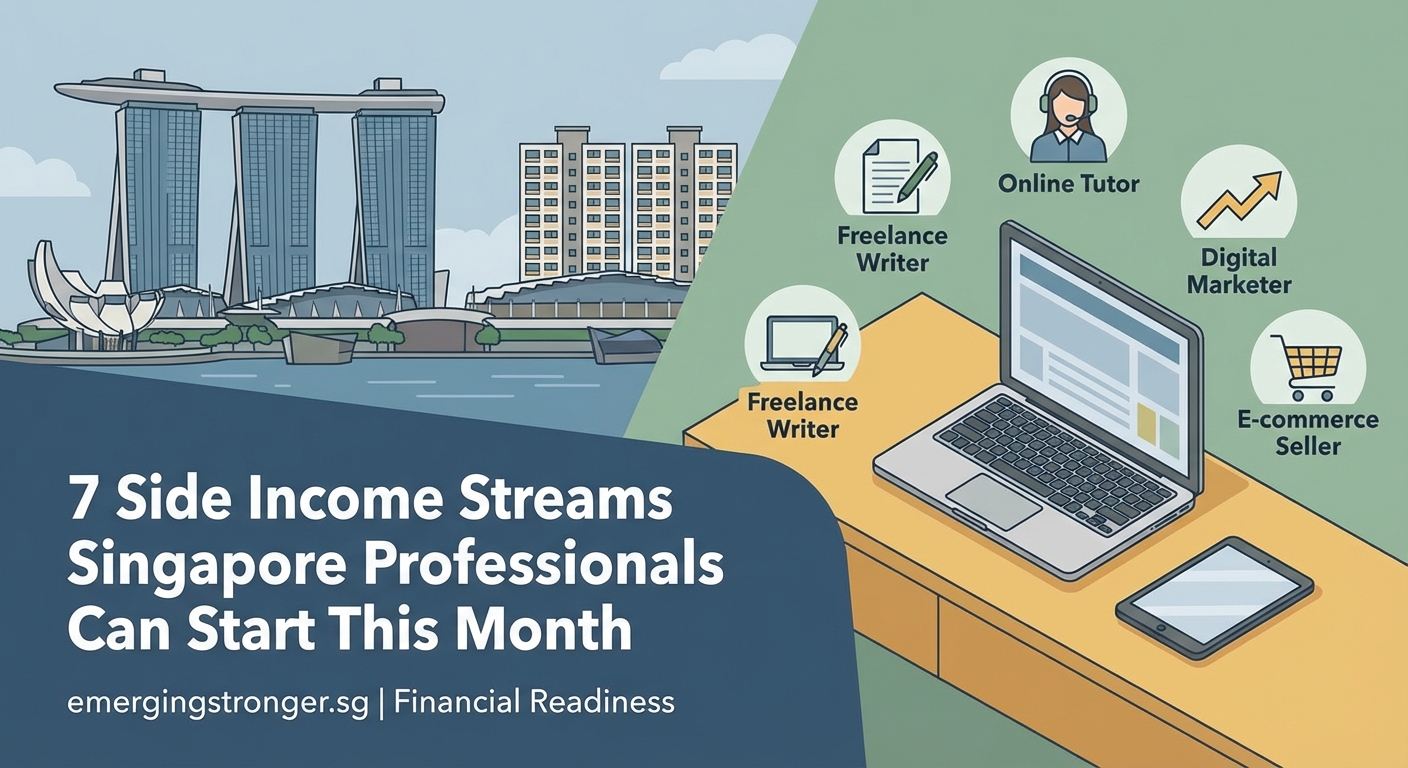
Your current job has taught you valuable skills that others will pay for. The trick is packaging them for the freelance market.
Platforms like Upwork, Fiverr, and local options such as FastJobs connect freelancers with clients. Common high-demand skills include writing, graphic design, web development, data analysis, and digital marketing.
Start by creating profiles on two platforms. Use real examples from your work (with confidential details removed). Price yourself competitively for the first few projects to build reviews, then increase rates as your reputation grows.
Steps to launch your freelance side income:
- Identify three skills from your day job that solve specific problems
- Research going rates on freelance platforms for similar services
- Create detailed profiles with portfolio samples
- Bid on 10 projects per week for the first month
- Deliver exceptional work to earn five-star reviews
- Raise rates by 20% after your first 10 completed projects
Most freelancers earn between $500 and $2,000 monthly within three months of consistent effort. The income is active rather than passive, but the flexibility is unmatched.
Online tutoring and coaching
Singapore’s education-focused culture creates constant demand for tutors. If you excel in any academic subject or professional skill, parents and students will pay for your expertise.
Platforms like SmileTutor, ChampionTutor, and TutorCity connect tutors with students. Hourly rates range from $30 for primary school subjects to $100+ for specialized professional coaching.
You can also tutor independently through word of mouth or social media. Many professionals teach weekend classes in their HDB void decks or nearby cafes.
Beyond academic subjects, consider coaching in areas like fitness, music, languages, or professional skills. A marketing manager could coach small business owners on social media strategy. An accountant could teach basic bookkeeping to entrepreneurs.
The advantage of tutoring is immediate income. Once you secure students, you’re earning from week one.
Creating digital products that sell while you sleep
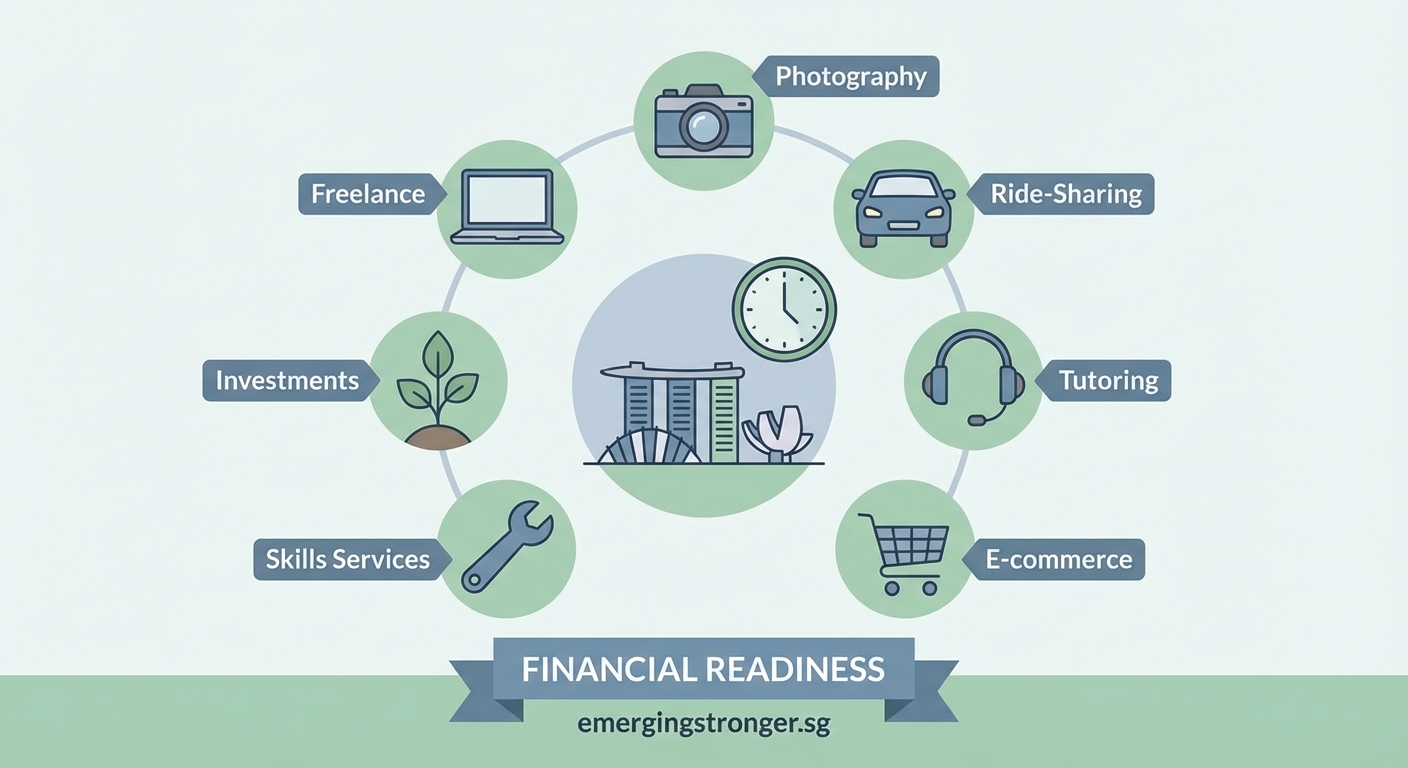
Digital products generate passive income after the initial creation work. Think ebooks, online courses, templates, spreadsheets, or design assets.
The process requires upfront effort but can pay dividends for years. A well-designed Excel template for personal budgeting could sell hundreds of copies at $15 each. An online course teaching a specific skill might generate $500 monthly with minimal maintenance.
Platforms like Gumroad, Teachable, and Udemy handle payment processing and delivery. You create once and earn repeatedly.
Choose topics where you have genuine expertise and there’s proven demand. Search existing platforms to see what’s selling. Look for gaps where existing products are poor quality or outdated.
“The best digital products solve one specific problem extremely well. Don’t try to teach everything about a topic. Solve the single biggest pain point your audience faces.”
Dividend investing for steady passive returns
Investing in dividend-paying stocks or Real Estate Investment Trusts (REITs) creates regular passive income. Singapore’s market offers numerous options with yields between 4% and 8% annually.
This approach requires capital upfront, but you can start small. Investing $5,000 in a diversified portfolio of Singapore blue-chip stocks might generate $250 to $400 annually in dividends.
REITs are particularly attractive because they’re required to distribute 90% of taxable income to shareholders. Singapore REITs cover sectors like retail, industrial, hospitality, and healthcare.
Use platforms like FSMOne, Syfe, or traditional brokerages to build your portfolio. Consider dollar-cost averaging by investing fixed amounts monthly rather than trying to time the market.
Comparing passive income investment options:
| Investment Type | Starting Capital | Expected Annual Yield | Risk Level | Time to First Return |
|---|---|---|---|---|
| Singapore Blue Chips | $3,000 | 3% to 5% | Low to Medium | 3 months |
| REITs | $2,000 | 5% to 8% | Medium | 3 months |
| Singapore Savings Bonds | $500 | 2.5% to 3.5% | Very Low | 6 months |
| Robo-advisor Portfolios | $1,000 | 4% to 6% | Medium | 3 to 6 months |
Building an investment portfolio takes time, but it’s one of the few truly passive income sources. Your money works while you sleep, commute, or focus on your primary career.
Content creation on social media platforms
Instagram, TikTok, and YouTube offer monetization opportunities for creators who build engaged audiences. Brands pay for sponsored content, affiliate marketing generates commissions, and platforms themselves share ad revenue.
The catch? Building an audience takes time and consistency. Most successful creators spend 6 to 12 months posting regularly before seeing meaningful income.
Choose a niche where you have knowledge and genuine interest. Singapore-focused content around food, property, finance, parenting, or career development tends to perform well locally.
Start by posting three times weekly for three months. Study what content performs best, then double down on those formats. Engage genuinely with your audience rather than chasing viral moments.
Once you reach 5,000 to 10,000 followers, brands will start reaching out for collaborations. Rates vary widely, but micro-influencers (10,000 to 50,000 followers) typically earn $200 to $1,000 per sponsored post.
Renting out assets you already own
You probably own assets that sit idle most of the time. Your car, spare room, parking space, or storage area could generate income.
Platforms like Tribecar and Drive lah let you rent out your vehicle when you’re not using it. Owners typically earn $300 to $800 monthly depending on their car model and rental frequency.
If you have a spare room, Airbnb or long-term rentals can generate substantial income. Even renting out a parking space in central locations can bring in $150 to $300 monthly.
The key is understanding regulations. HDB has specific rules about renting rooms. Condo management might restrict Airbnb. Check your property’s guidelines before listing.
For those with financial challenges, monetizing existing assets provides income without additional purchases or skills development.
Offering specialized services in your neighborhood
Local services remain in high demand despite digital transformation. People need help with tasks they can’t or won’t do themselves.
Consider services like:
- Pet sitting or dog walking
- Elderly companionship or errand running
- Home organization and decluttering
- Basic home repairs or furniture assembly
- Meal prep or baking for busy families
- Photography for family events or small businesses
These services work well as side income because they’re flexible and local. You’re not competing with global freelancers or requiring complex infrastructure.
Start by offering services to neighbors, friends, and family. Ask for referrals and testimonials. Create simple flyers or social media posts advertising your availability.
Price services competitively at first, then increase rates as demand grows. Many neighborhood service providers earn $500 to $1,500 monthly working just weekends.
Matching income streams to your situation
Not every opportunity suits every person. Your choice should consider your available time, existing skills, risk tolerance, and energy levels.
Use this framework to evaluate options:
| Your Situation | Best Income Streams | Avoid |
|---|---|---|
| Limited time (less than 5 hours weekly) | Dividend investing, digital products, asset rental | Freelancing, tutoring, content creation |
| Limited capital (less than $500) | Freelancing, tutoring, neighborhood services | Dividend investing, e-commerce |
| High energy and ambition | Content creation, freelancing, multiple streams | Passive-only approaches |
| Recovering from setbacks | Low-stress options like asset rental, simple freelancing | High-pressure client work, aggressive timelines |
| Strong existing skills | Freelancing, coaching, digital products | Learning entirely new fields |
The professionals who succeed with side income typically start with one stream, master it, then add a second complementary option. Trying to launch five income streams simultaneously leads to burnout and poor results.
Common mistakes that sabotage side income efforts
Many professionals start strong but stumble on predictable obstacles. Avoiding these mistakes dramatically increases your success rate.
Underpricing your services: New freelancers and tutors often charge too little, attracting difficult clients and undervaluing their expertise. Research market rates and price accordingly.
Ignoring tax obligations: Side income must be declared to IRAS. Set aside 10% to 15% of earnings for tax obligations. Consult an accountant if your side income exceeds $10,000 annually.
Violating employment contracts: Some employers restrict outside work, especially in competing fields. Review your contract before starting any side income. Be transparent if required.
Neglecting primary employment: Your day job pays most bills and provides stability. Never let side income compromise your performance or relationships at work.
Burning out from overcommitment: Adding 20 hours of side work to a 45-hour work week is unsustainable. Start small with realistic time commitments.
Building mental resilience helps you navigate the challenges of managing multiple income streams without sacrificing your wellbeing.
Building systems that make side income sustainable
The difference between side income that fizzles out and income that grows is systems. You need repeatable processes that don’t require constant decision-making.
Create templates for common tasks. Freelancers should have proposal templates, project checklists, and invoice formats ready. Tutors benefit from lesson plan templates and progress tracking sheets.
Automate wherever possible. Use scheduling tools like Calendly for client bookings. Set up automatic invoicing through platforms like PayPal or Stripe. Use social media scheduling tools if you’re creating content.
Batch similar tasks together. Freelancers should batch client communications into specific time blocks rather than responding throughout the day. Content creators should film or write multiple pieces in single sessions.
Set clear boundaries around your availability. Communicate your response times to clients upfront. Don’t check side income messages during your day job or family time.
Scaling from side income to significant earnings
Most professionals start earning $300 to $800 monthly from their first side income stream. With refinement and consistency, that can grow to $2,000 to $4,000 within a year.
The path to higher earnings involves increasing rates, improving efficiency, or adding complementary streams. A freelance writer might start at $50 per article, increase to $150 after building expertise, then add a digital product teaching others to write.
Track your hourly earnings religiously. Calculate total time spent (including admin, marketing, and delivery) divided by income earned. Focus on activities that generate the highest hourly returns.
Consider whether your side income could eventually replace your primary job. Some professionals transition to new careers built initially as side projects. Others prefer maintaining the security of employment while enjoying supplemental income.
Starting this week without overthinking
The biggest obstacle to side income isn’t lack of opportunity or skills. It’s overthinking and delayed action.
Pick one income stream from this article that matches your situation. Spend this week taking the first concrete step. Create a freelance profile. List your first digital product. Open an investment account. Post your first piece of content.
Don’t wait for perfect conditions or complete knowledge. You’ll learn faster by doing than by planning endlessly.
Set a modest initial goal. Aim to earn your first $100 within 30 days. Once you prove the concept works, you can refine and scale.
Remember that building financial resilience isn’t about getting rich overnight. It’s about creating options, reducing financial stress, and gaining confidence that you can generate income beyond your primary employment.
Your side income journey starts with one choice
Thousands of Singapore professionals are already earning meaningful side income while maintaining their careers and personal lives. The opportunities exist, the platforms are accessible, and the market rewards genuine value.
The question isn’t whether side income is possible. It’s which stream you’ll start with and when you’ll take that first step.
Choose your path based on your unique situation, not what sounds most impressive or what others are doing. Start small, stay consistent, and adjust based on real results rather than assumptions.
Your financial resilience and peace of mind are worth the effort. Take action this week, and you’ll be earning your first side income within a month.