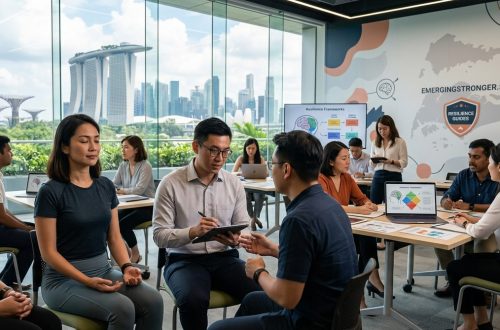
Building Singapore’s resilience in times of economic uncertainty requires more than just hope. It demands deliberate strategies, adaptive mindsets, and proactive actions. With global shifts and regional challenges, Singapore must stay agile and resilient. This article offers clear, actionable resilience strategies tailored for policy makers, business leaders, and individuals. These approaches will help Singapore weather storms and emerge stronger, ready for new opportunities.
Singapore can strengthen its resilience during economic uncertainty by diversifying industries, fostering innovation, nurturing community support, improving adaptability, and maintaining financial discipline. These strategies enable both policymakers and individuals to navigate challenges confidently and emerge stronger from adversity.
Understanding the importance of resilience in Singapore’s economy
Singapore’s economy is tightly woven into the global fabric. Its success hinges on trade, finance, and a skilled workforce. When international markets face turbulence, or regional conflicts arise, Singapore feels the ripple effects. Resilience is about more than bouncing back from setbacks. It involves preparing proactively, diversifying sources of strength, and cultivating a mindset that views challenges as opportunities for growth.
Policymakers, business leaders, and residents all play roles in this collective effort. Resilience strategies are not just reactive measures but active pursuits that embed adaptability into daily life and long-term planning. By doing so, Singapore can transform uncertainties into catalysts for innovation and growth.
Practical resilience strategies Singapore can implement
- Diversify economic sectors
Relying heavily on specific industries increases vulnerability during downturns. Singapore can strengthen resilience by expanding into emerging sectors such as green technology, digital services, and biotech. Encouraging startups and attracting foreign investments in these areas spreads risk and opens new revenue streams.
Technical tip: Develop targeted incentives for innovation hubs and R&D centers. Invest in workforce upskilling aligned with future industries. For example, programs like https://emergingstronger.sg/the-resilience-toolkit-essential-skills-for-navigating-uncertainty-in-modern-singapore/ can help professionals adapt.
- Foster innovation and digital transformation
Innovation drives resilience by enabling businesses to adapt quickly. Singapore’s push towards a Smart Nation involves leveraging technology to improve efficiency and create new market opportunities. Digital transformation enhances operational agility and customer engagement.
Actionable step: Support small and medium enterprises in adopting cloud solutions, automation, and data analytics. Policy measures like grants or tax incentives can accelerate this process. As industry experts often advise, “Innovation is a continuous journey that keeps Singapore competitive despite global shocks.”
- Build strong community and support networks
Resilience is not just about economy but also about social fabric. Strong communities act as safety nets during crises. Encouraging volunteerism, community initiatives, and mental health awareness fosters social cohesion.
Scanner tip: Form local support groups or online communities that share resources and knowledge. For individuals, maintaining connections reduces stress and builds emotional resilience. A resilient society is better equipped to handle economic turbulence.
- Improve adaptability and lifelong learning
In uncertain times, adaptability is critical. Singaporeans can stay resilient by embracing lifelong learning. Upskilling and reskilling enable workers to pivot when industries shift.
Practical process: Use platforms like https://emergingstronger.sg/5-mental-resilience-techniques-every-singaporean-professional-should-master/ to develop mental resilience, or participate in government-supported training programs. Encouraging a growth mindset helps individuals see change as an opportunity rather than a threat.
- Maintain financial discipline and preparedness
Economic uncertainty often leads to financial stress. Building an emergency fund, reducing debt, and managing cash flow are vital. Financial literacy programs can equip residents with the knowledge to plan better.
Technique vs mistake:
| Technique | Common Mistake |
|---|---|
| Building a 6-month emergency fund | Underestimating future expenses |
| Diversifying income sources | Relying on a single income stream |
| Practicing disciplined spending | Ignoring inflation impacts |
“Financial resilience is about more than savings. It involves strategic planning and disciplined habits that sustain individuals through long-term economic fluctuations,” says financial advisor Mr Lim.
Recovery frameworks to navigate through economic setbacks
Implementing a structured recovery plan ensures Singapore and its people bounce back faster:
- Assessment: Understand the impact of the crisis on your personal or business finances.
- Adjustment: Reassess budgets, pivot business models, or acquire new skills.
- Action: Engage with government support schemes, seek new markets, or explore alternative income sources.
- Growth: Reinvest in growth areas, foster innovation, and strengthen community ties.
Key techniques and pitfalls table
| Technique | Mistake to Avoid |
|---|---|
| Creating a flexible budget | Ignoring inflation or unexpected costs |
| Leveraging government grants | Relying solely on aid without strategic plans |
| Building resilience through community | Isolating oneself during crises |
Cultivating a growth mindset for lasting resilience
A resilient mindset shapes how challenges are perceived. Viewing setbacks as opportunities for learning fosters adaptability. Many Singaporeans have turned adversity into success stories. For example, entrepreneurs who faced downturns used the experience to innovate or pivot.
To develop this mindset, focus on:
- Embracing continuous learning
- Practicing self-compassion
- Setting realistic goals
- Seeking feedback and support
Expert advice
“Resilience begins with a mindset shift. When you view challenges as opportunities rather than threats, you unlock the potential for growth,” emphasizes resilience coach Ms Tan.
Building resilience through continuous learning and community support
Lifelong learning keeps skills relevant and minds sharp. Singapore’s initiatives like SkillsFuture offer pathways for upskilling. Community support networks provide emotional strength, enabling people to navigate uncertainty with confidence.
By fostering both individual growth and collective strength, Singapore creates an environment where resilience is embedded in daily life. Remember, resilience is a journey, not a destination.
Final thoughts: taking proactive steps today
Building resilience during Singapore’s economic uncertainty is about more than reacting to crises. It involves strategic planning, mindset shifts, and community engagement. Start small—review your finances, learn new skills, or connect with local groups. Over time, these small steps accumulate into a robust foundation that can withstand storms.
Adopting these resilience strategies helps you stay confident and adaptable, regardless of what the future holds. The key is to remain proactive, flexible, and optimistic. Together, Singapore can face challenges head-on and come out stronger on the other side.
Staying resilient in times of change
Resilience is a vital trait for Singapore’s future prosperity. By diversifying industries, fostering innovation, nurturing community ties, and maintaining financial discipline, both policymakers and residents can create a resilient environment. Remember, resilience is built through consistent effort, mindset, and community support. Start integrating these strategies today to ensure that Singapore continues to thrive amid global uncertainties. Your proactive steps today secure a stronger tomorrow for all.