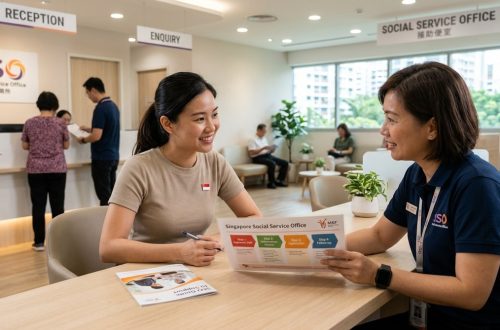
If you’re feeling the pinch of rising costs or navigating a career change, you’re not alone. The Singapore government has rolled out a suite of recovery support schemes for 2026 to help you get back on your feet. Whether you’re a senior looking for healthcare subsidies or a young family needing cash payouts, there’s something for you. Let’s break down what’s available.
In 2026, Singapore offers multiple recovery support schemes including the Assurance Package with cash payouts, GST Vouchers, Majulah Package for seniors, Workfare Income Supplement for lower-wage workers, and Silver Support. Most applications are done via SingPass. Many schemes automatically disburse based on your income and housing type. Visit SupportGoWhere to check your eligibility and get a personalised list of benefits you can receive this year.
Recovery Support Schemes Explained
When we talk about recovery support schemes in Singapore, we mean government initiatives designed to help individuals and households manage cost-of-living pressures, adapt to economic changes, and bounce back from setbacks. These are not handouts. They are targeted measures to ensure that no one is left behind during uncertain times.
The 2026 Budget, announced in February, introduced enhancements and extensions to several existing schemes. The focus this year is on three main areas:
- Cash and voucher support to offset everyday expenses.
- Healthcare and retirement adequacy for seniors and vulnerable groups.
- Career and income support for workers and families affected by retrenchment or reduced hours.
Let’s look at the specific schemes available.
Who Can Benefit from These Schemes?
The beauty of these programmes is that they cover a wide range of situations. You might be:
- A senior citizen living alone or with family.
- A low- to middle-income household.
- A parent with young children.
- A person with disabilities or caring for a family member.
- A retrenched worker or someone with reduced income.
Eligibility is usually based on your Assessable Income (AI), Annual Value (AV) of your home, or your age. Many schemes are automatically disbursed if you qualify. Others require a simple online application.
The Top Support Schemes You Should Know About for 2026
Here is a table comparing the most important recovery support schemes available in 2026. Use this as your cheat sheet.
| Scheme | What You Get | Who Qualifies | How to Claim |
|---|---|---|---|
| Assurance Package (Cash + CDC Vouchers) | Cash payout of $500 to $1,000 per adult; CDC Vouchers of $500 per household | Singapore Citizens aged 21+; household with AV <= $25,000 | Automatic; vouchers distributed online via GoWhere |
| GST Voucher (GSTV) – Cash & MediSave | Up to $850 cash and $500 MediSave top-up per year | Citizens aged 21+; AI <= $34,000; AV <= $21,000 | Automatic for those on record |
| Majulah Package | Up to $15,000 over 10 years (cash + CPF top-ups) | Seniors aged 50+ with lower lifetime wages | Automatic based on CPF records |
| Workfare Income Supplement (WIS) | Cash + CPF contributions up to $4,500/year | Workers aged 30+ earning up to $2,500/month | Automatic for CPF contributors |
| Silver Support Scheme | Quarterly cash payments of $315 to $945 | Seniors aged 65+ with low lifetime wages and low income | Automatic |
| Home Caregiving Grant | $400 cash per month | Caregivers of seniors with moderate to severe disability | Apply via AIC website |
| SkillsFuture Credit (Top-up) | $500 top-up for training | All Singapore Citizens aged 25+ | Log in to SkillsFuture portal |
| Short-Term Relief Fund (Community Care) | Up to $1,000 per month for up to 6 months | Families facing crisis due to loss of income | Apply via Social Service Office / Family Service Centre |
Note: Amounts are approximate and subject to change based on individual circumstances. Always check the official SupportGoWhere portal for your personalised estimate.
How to Apply for Recovery Support in 3 Simple Steps
Applying for these schemes is easier than you think. Follow these steps to get what you’re entitled to.
Step 1: Check your eligibility on SupportGoWhere
Go to supportgowhere.life.gov.sg and log in with your SingPass. The system will automatically calculate which schemes you qualify for and show the estimated amounts. It takes 5 minutes.
Step 2: Verify your personal details
Make sure your NRIC, address, and bank account information on MyInfo are up to date. Many payouts are credited directly to your bank account or through PayNow-NRIC. If your details are wrong, you could miss out.
Step 3: Apply only if required
For schemes like the Home Caregiving Grant or Short-Term Relief Fund, you will need to submit an application. Prepare supporting documents such as medical reports, tenancy agreements, or termination letters. Download the forms, complete them, and submit online or at the nearest Social Service Office.
Tip: Set a calendar reminder to check your eligibility again in December 2026. Some schemes, like CDC Vouchers, are reissued yearly.
Common Mistakes to Avoid When Applying
Even with a straightforward process, people sometimes slip up. Here are the most common errors:
- Assuming you are not eligible without checking first. Many Singaporeans leave money on the table because they think they earn too much.
- Not updating your contact details with CPF Board or IRAS. If your mobile number or address is outdated, you may not receive payment notifications.
- Missing application deadlines for non-automatic schemes. For example, the Home Caregiving Grant requires annual renewal.
- Using the wrong SingPass account. If you are a joint applicant (e.g., for CDC Vouchers), ensure the main applicant logs in correctly.
- Forgetting to link your child’s or elderly parent’s records. Families often miss out on dependent-related grants.
Expert Advice: Making the Most of Available Support
I spoke to Mei Ling, a financial counsellor at a Community Development Council. Here is her top tip:
“Don’t treat these schemes as one-time help. Think of them as part of your annual financial plan. Set aside the cash payouts for your emergency fund or use the MediSave top-ups to cover future medical expenses. And if you receive CDC Vouchers, plan your grocery shopping around them to stretch your dollar. Also, call your nearest Family Service Centre if you’re unsure. They can walk you through the entire process for free.”
She also recommends checking for smaller, lesser-known grants. For instance, the Seniors’ Mobility and Enabling Fund (SMF) can subsidise walking aids, wheelchairs, or home modifications. Many seniors don’t know about it until they visit a hospital.
Additional Resources and Next Steps
To put all this information into action, here are a few trusted places to visit:
- SupportGoWhere – your one-stop portal for all government schemes.
- CPF Board – for Majulah Package and WIS details.
- Agency for Integrated Care (AIC) – for caregiver and senior support.
- SkillsFuture Singapore – for training credits.
- Your nearest Social Service Office (SSO) – for crisis relief applications.
For more in-depth guidance on related topics, you might find these articles helpful:
- Learn how to navigate Singapore’s retrenchment support programs and benefits if you have lost your job.
- If you’re a senior, read about balancing elder care and personal recovery strategies for the sandwich generation.
- For families, check out how to build a 6-month emergency fund in Singapore on any salary to complement these government schemes.
- If you are struggling with debt, our complete guide to debt relief options for struggling Singaporeans provides practical steps.
Taking Charge of Your Recovery Journey in 2026
Recovery is not a passive process. The government can provide the safety net, but you need to step forward and claim it. Start by logging into SupportGoWhere this week. See what you are eligible for. Then set a plan for how you will use the funds to build a more resilient financial future.
Remember, these schemes are designed to help you weather the storm and come out stronger. You don’t have to do it alone. Reach out to a Social Service Officer if you need guidance. And keep checking back with Emerging Stronger for more real stories and practical advice on bouncing back.
Your next chapter is waiting. Take the first step today.