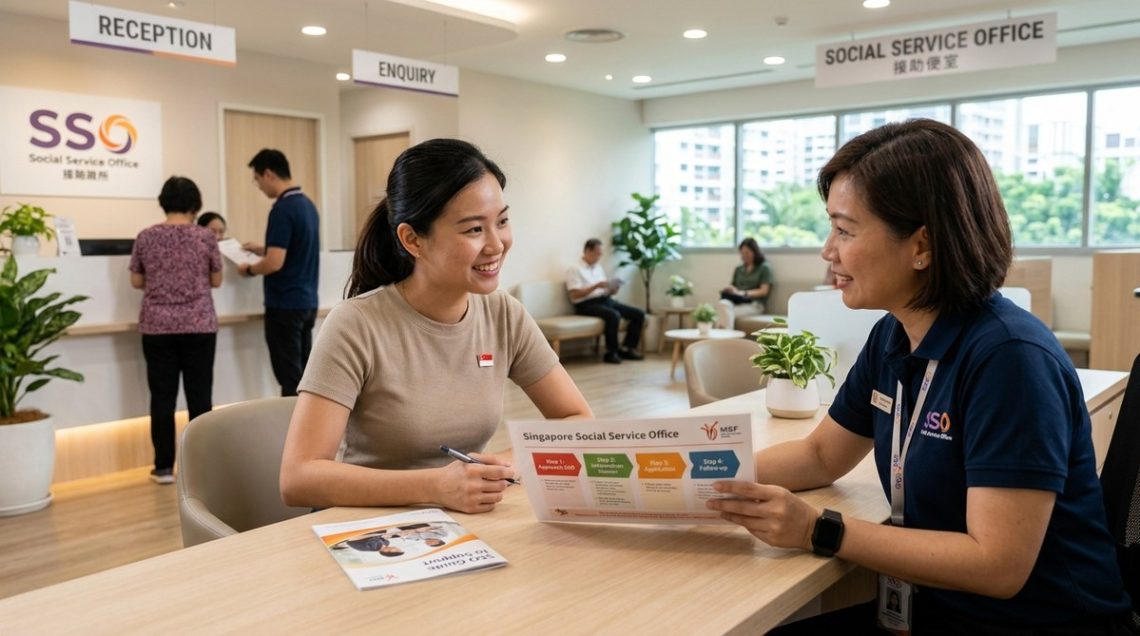
Life can change in an instant. One moment everything feels stable. The next, you are facing a mountain of challenges. Maybe it's a retrenchment that leaves you wondering how to pay the bills. Maybe it's a health crisis, either physical or mental, that makes daily life feel impossible. Or maybe you are watching a loved one struggle with addiction and you don't know where to turn. In these moments, it is easy to feel alone. But you are not. Across Singapore, in nearly every HDB heartland, there is a place built specifically for moments like this: the Social Service Office (SSO). This is your step by step guide to finding the recovery support you need at a Singapore Social Service Office.
Singapore's Social Service Offices (SSOs) are your local gateway to financial aid, counselling, and community programmes. This guide provides a clear, step by step process for accessing recovery support at a Singapore Social Service Office, from booking an appointment to following up on your case. You don't need to navigate hardship alone. SSOs are here to support your recovery journey with dignity and care.
What Exactly Is a Social Service Office
Think of an SSO as your neighbourhood hub for social support. The Ministry of Social and Family Development (MSF) runs these offices, and they are placed strategically across the island. You will find them in places like Taman Jurong, Kreta Ayer, or Bedok. They are designed to be accessible. No need to travel all the way to town. Just go to your local branch.
SSOs are the main entry point for ComCare, Singapore's primary social assistance scheme. But they do much more than just hand out financial aid. They connect you with counselling services, employment support, and community resources. If you are struggling with a mental health issue, they can refer you to a professional. If you are recovering from an addiction, they can link you to a specialised programme. If you have lost your job, they can help you plan your next steps.
The goal is simple: to help you stabilise your situation and build long term self reliance. They are not a permanent crutch. They are a springboard to help you bounce back. This entire system is designed to offer compassionate recovery support for residents of Singapore.
Types of Recovery Support You Can Get at an SSO
SSOs are not a one size fits all service. They offer a wide range of support tailored to your specific needs. Here are the main types of recovery support available:
- ComCare Financial Assistance: This is the core programme. It comes in a few forms. Short to Medium Term Assistance (SMTA) helps individuals or families who have lost their income or are temporarily unable to work. Long Term Assistance (LTA) is for elderly or disabled individuals who have little to no income. There is also support for specific needs like rental assistance and utility bill help.
- Counselling and Mental Health Support: If you are feeling overwhelmed, anxious, or depressed, your SSO officer can help. They can provide brief counselling or refer you to a mental health professional. This is a vital step for anyone needing emotional recovery support at a Social Service Office.
- Employment and Training Support: Losing a job is tough. SSOs can help you tap into programmes like SkillsFuture to upgrade your skills. They can connect you with job placement services and career coaching. The goal is to help you find stable employment again.
- Community Resource Linkage: SSOs work closely with Family Service Centres (FSCs), community clubs, and grassroots organisations. They can point you to food banks, CDC vouchers, and other local assistance.
- Addiction Recovery Referrals: Facing addiction is incredibly hard. SSOs can refer you to specialised services like the National Addiction Management Service (NAMS) or the WE CARE community services. You do not have to fight this battle on your own.
For more on building inner strength during tough times, read our guide on 5 Mental Resilience Techniques Every Singaporean Professional Should Master.
How to Connect with Your SSO for Recovery Support
Getting help is a process. It is straightforward, but knowing what to expect can reduce the anxiety. Here is a clear, step by step guide to accessing recovery support at a Singapore Social Service Office.
- Find Your Nearest SSO. Start by visiting the MSF website. Use the branch locator tool. You can also just google "SSO near me". The system is organised by your residential postal code. Each SSO serves a specific area. Make sure you go to the correct one.
- Book an Appointment. Some SSOs accept walk ins, but it is much better to book an appointment. You can call them directly or use the eAppointment system on the MSF website. This saves you time and ensures you see the right officer. Tell them you are seeking recovery support so they can prepare.
- Prepare Your Documents. This is crucial. Bring your NRIC, proof of address, and any documents related to your situation (medical bills, retrenchment letter, bank statements). A well prepared file helps the officer assess your case faster. Check the table below for a full checklist.
- Attend the Intake Interview. This is a conversation, not an interrogation. The officer will ask about your background, your current difficulties, and what kind of support you need. Be honest. Share your struggles openly. The more they know, the better they can help you. They are trained to be compassionate and non judgmental.
- Work on Your Care Plan. Based on your conversation, the officer will develop a recovery plan. This could include ComCare payouts, a referral to a counsellor, or a link to a job training programme. You are an active part of this process. Ask questions. Make sure you understand the steps.
- Follow Up and Adjust. Recovery is not instant. You will need to follow up with your officer periodically. If your situation changes, let them know. The support can be adjusted to fit your evolving needs.
If you are unsure how to have difficult conversations about your situation, our guide on How to Ask for Help Without Shame: A Recovery Mindset for Singaporeans can help.
Documents You Should Bring to Your First Appointment
Having the right documents can make your visit much smoother. Here is a quick reference table.
| Document Type | Why It Is Needed | Examples |
|---|---|---|
| Personal Identification | To verify identity and household composition | NRIC for all family members living with you |
| Proof of Income | To assess financial eligibility for schemes | Latest 3 months payslips, CPF contribution history, Notice of Assessment (NOA) |
| Proof of Expenses | To understand your financial commitments | Rental agreement, SP utilities bill, HDB service & conservancy charges, medical receipts, child care fees |
| Supporting Documents | To provide context for your recovery needs | Clinic letters, hospital discharge summary, retrenchment letter, police report, school fees invoice |
Keep these documents organised in a clear file. It shows you are serious about your recovery journey and helps the officer process your application faster.
Common Mistakes When Seeking Support (And How to Avoid Them)
Many people make simple mistakes that delay or complicate their access to recovery support. Here is how to avoid them.
| Common Mistake | How to Avoid It |
|---|---|
| Walking in without an appointment | Always call or book online first. It saves you hours of waiting time. |
| Bringing incomplete documents | Call the SSO hotline and ask for the full document checklist. Preparation is key. |
| Hiding information out of shame | The officer is there to help, not to judge. Withholding information can lead to incorrect assessments. Be fully transparent. |
| Not following up on referrals | If your officer refers you to a counsellor or training programme, take action promptly. The longer you wait, the harder it feels. |
| Giving up after one rejection | Sometimes applications are deferred, not rejected. Ask for clarification. Work with your officer to address the gaps. Persistence is part of recovery. |
The Mindset Behind Successful Recovery
Accessing recovery support from an SSO is a practical step. But the mental shift is just as important. Many of us in Singapore grow up believing we must handle everything ourselves. We feel paiseh or malu to ask for help. We worry about what our neighbours or relatives might say.
Let go of that idea.
Asking for help is not a failure. It is a responsible decision. It is you taking control of your life and saying, "I deserve a better future." The most successful recoveries start with a single moment of honesty.
"Recovery is not about never falling. It is about learning how to get back up. The SSO is not here to judge you. We are here to lift you up so you can stand on your own again."
* Social Service Officer, Singapore
This mindset of resilience is something you can build over time. It is a muscle. The more you use it, the stronger it gets.
For deeper insights, read about Why Some People Bounce Back Faster: The Science of Resilience Explained.
How SSOs Support Different Recovery Journeys
Every recovery journey looks different. Let us look at a few common situations.
Financial Recovery After Retrenchment
You have been retrenched. Your savings are running out. An SSO can provide ComCare SMTA to cover your basic needs while you search for a new job. They can link you to career coaching and SkillsFuture courses to boost your employability. You are not just getting a handout. You are getting a hand up. Our article on How to Navigate Singapore's Retrenchment Support Programs and Benefits provides more context.
Mental Health Recovery from Burnout or Depression
You feel exhausted all the time. Nothing brings you joy anymore. Maybe you have thought about seeing a therapist but don't know how to start or worry about the cost. An SSO can connect you to subsidised counselling services at a Family Service Centre (FSC). They can also help you apply for medical subsidies if you need psychiatric care.
Addiction Recovery for You or a Loved One
Addiction is a disease, not a moral failing. If you or someone in your family is struggling with substance abuse or gambling, an SSO can provide a referral to the National Addiction Management Service (NAMS). They can also connect you with community support groups where you can share your journey safely.
Family Recovery After a Crisis
A family breakdown, divorce, or even an episode of family violence can leave everyone feeling shattered. SSOs can provide immediate safety planning, financial support, and referrals to family counselling services. They help stabilise the home environment so healing can begin. Learn more about Building Emotional Resilience Through Community Engagement in Singapore.
Your First Step Toward a Stronger Tomorrow
This is your moment. You have the information. You know the process. Now it is time to act.
You do not need to have everything figured out. You do not need to be at your strongest. You just need to show up. Walk into your local SSO with your documents and your willingness to rebuild. The officers there have seen countless stories of hardship and recovery. They know what works. Trust their guidance and trust your own ability to grow.
Recovery is a journey. There will be setbacks. There will be small wins. Celebrate each milestone, no matter how small. Whether it is getting your first ComCare payout, attending your first counselling session, or landing a new job, every step forward counts.
At Emerging Stronger, we believe in your ability to bounce back. We have shared stories of Singaporeans who faced incredible odds and came out stronger. You can read about Three Singapore Families Share How They Overcame Financial Crisis Together for inspiration.
The path to recovery support at a Singapore Social Service Office is open to you. It is safe. It is private. And it is designed to help you succeed. Go ahead and take that first step. Your future self will thank you.