
When your income starts to feel uncertain, the worry keeps you up at night. You lie there wondering if you’ve saved enough, if your family will be okay, if one wrong move could unravel everything you’ve built.
That fear is real. But it doesn’t have to control your decisions.
Protecting your family’s financial future during uncertain times requires three core pillars: building a robust emergency fund covering six months of expenses, securing adequate insurance protection, and creating multiple income streams. Start with small, consistent actions rather than waiting for perfect conditions. Focus on what you can control today, document your financial baseline, and involve your family in age-appropriate money conversations to build collective resilience.
Understanding where you stand right now
Before you can protect anything, you need to know what you’re protecting.
Most families skip this step. They jump straight to solutions without understanding their actual situation.
Start with a simple financial inventory. List every income source, every regular expense, every debt, and every asset you own. Include your CPF balances, insurance policies, property values, and investment accounts.
This isn’t about judgment. It’s about clarity.
You might discover you’re in better shape than you thought. Or you might find gaps that need immediate attention. Either way, you can’t make good decisions without good information.
Set aside two hours this weekend. Gather your bank statements, insurance documents, and loan papers. Create a simple spreadsheet or use a notebook. The format doesn’t matter as much as the honesty.
Building your financial safety net step by step
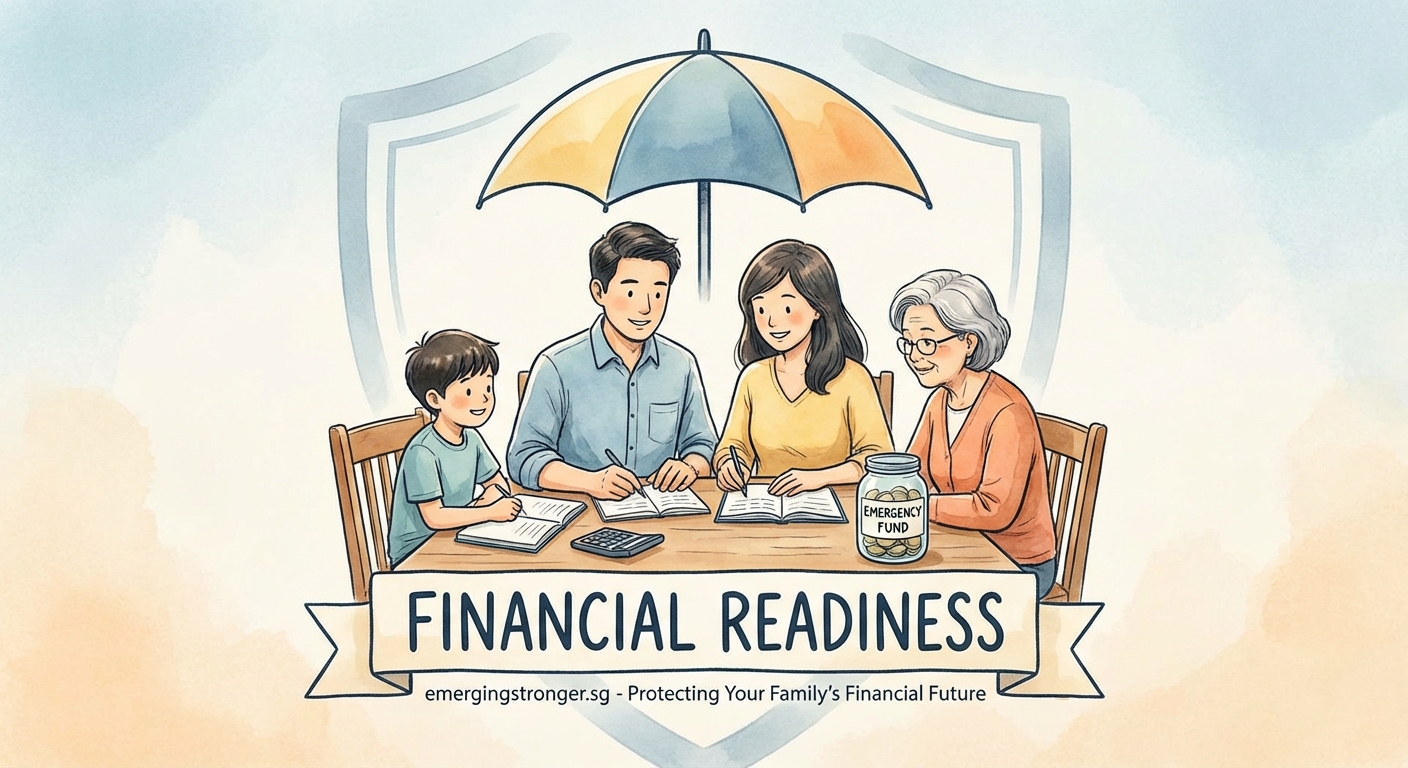
Your emergency fund is your first line of defense. Not your investments. Not your insurance. Your accessible cash.
Here’s how to build it systematically:
- Calculate your monthly essential expenses (housing, utilities, food, transport, insurance, minimum debt payments)
- Multiply that number by six to get your target emergency fund
- Open a separate savings account that you won’t touch for daily expenses
- Set up an automatic transfer of 10% to 20% of your income to this account every payday
- Review and adjust every three months as your situation changes
The six-month target might feel impossible right now. That’s okay. Start with one month. Then two. Progress beats perfection every time.
If you’re facing immediate income loss or reduction, learning how to navigate Singapore’s retrenchment support programs can provide temporary relief while you rebuild your buffer.
“The families who weather financial storms best aren’t the ones with the highest incomes. They’re the ones who built their safety nets before they needed them.” — Financial counselor with 15 years of experience helping Singapore families
Insurance protection that actually makes sense
Insurance feels boring until you need it. Then it becomes everything.
But buying the wrong coverage wastes money you can’t afford to waste. Here’s what matters most for family protection:
Term life insurance should cover at least 10 times your annual income. This ensures your family can maintain their lifestyle and meet major expenses if something happens to you. Term insurance is affordable because it’s pure protection without investment components.
Critical illness coverage protects against the financial impact of serious health conditions. Aim for coverage equal to five years of your income. This gives you breathing room to recover without destroying your savings.
Disability income insurance replaces your salary if injury or illness prevents you from working. Many people overlook this, but you’re statistically more likely to become disabled than to die during your working years.
Personal accident coverage is relatively inexpensive and covers medical expenses and income loss from accidents.
Skip investment-linked policies if money is tight. Separate your protection needs from your investment goals. Buy term insurance and invest the difference yourself.
Review your existing policies. Many people discover they’re over-insured in some areas and under-insured in others. Cancel redundant coverage and redirect that money to gaps.
Creating income resilience through diversification
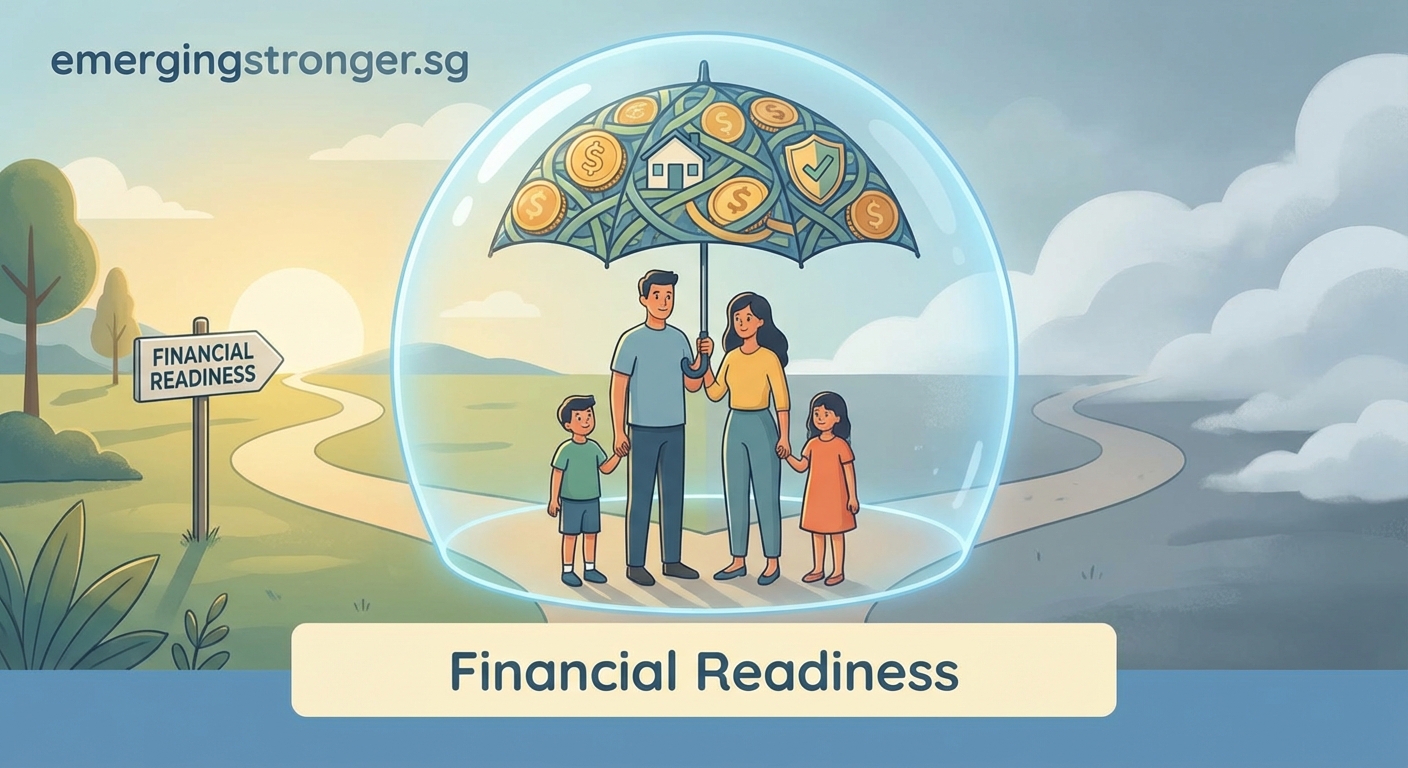
Relying on a single income source is the biggest financial risk most families face. One retrenchment, one health crisis, one industry downturn, and everything crumbles.
You need multiple streams. Not all at once. But deliberately, over time.
Consider these practical options for Singapore families:
- Freelance or consulting work in your existing field during evenings or weekends
- Online tutoring if you have expertise in academic subjects
- Rental income from a spare room or parking space
- Part-time gig economy work through platforms like Grab, Deliveroo, or TaskRabbit
- Small online business selling products or services you can fulfill from home
- Investment income from dividend stocks or REITs once you have surplus savings
Start with one additional income stream. Make it sustainable before adding another. The goal isn’t to work yourself to exhaustion. It’s to create options.
Your spouse’s career matters just as much as yours. If one partner has been out of the workforce, consider gradual re-entry through part-time work or skill upgrading courses. Two incomes provide exponentially more security than one.
For families where financial hardship is already creating strain, working together on income solutions can actually strengthen relationships rather than damage them.
Smart debt management during uncertain times
Debt amplifies financial stress during income uncertainty. Every dollar you owe is a dollar you must pay regardless of what’s happening with your earnings.
Here’s your priority sequence for managing debt:
| Debt Type | Priority Level | Action Strategy |
|---|---|---|
| Credit card balances | Highest | Pay minimum on all, throw extra money at highest interest rate first |
| Personal loans | High | Consolidate if possible, negotiate payment plans if struggling |
| Car loans | Medium | Consider downgrading vehicle if payment exceeds 15% of income |
| Home loans | Medium | Refinance if rates have dropped, but avoid extending term unnecessarily |
| Study loans | Lower | Maintain regular payments, but prioritize higher-interest debt first |
Avoid taking new debt to pay old debt unless you’re consolidating at a genuinely lower interest rate. That spiral leads nowhere good.
If you’re struggling with payments, contact your lenders immediately. Singapore banks have hardship programs that can temporarily reduce payments or freeze interest. But they only work if you ask before you default.
Teaching your children financial resilience
Your kids are watching how you handle money stress. Whether you realize it or not, you’re teaching them lessons they’ll carry forever.
Don’t hide financial challenges completely. Age-appropriate honesty builds resilience better than pretending everything is perfect.
For younger children (under 10), keep it simple. “We’re being more careful with money right now, so we’re eating at home more instead of restaurants.” Focus on actions, not anxiety.
For older children and teenagers, include them in appropriate discussions. Show them how you budget. Explain why you’re making certain choices. Let them contribute ideas for saving money.
This isn’t about burdening them with adult worries. It’s about teaching resilience through real-life application.
Give them opportunities to earn, save, and make spending decisions with their own money. The lessons stick better when they’re using their own resources.
The mental game of financial uncertainty
Money stress affects your decision-making ability. When you’re anxious, you either freeze and avoid decisions entirely, or you make impulsive choices trying to fix everything at once.
Neither helps.
You need mental strategies as much as financial ones. Here’s what works:
Create a weekly money check-in. Set aside 30 minutes every Sunday to review your accounts, upcoming expenses, and progress toward goals. Regular small reviews prevent the panic of monthly surprises.
Separate what you can control from what you can’t. You can’t control the job market or the economy. You can control your spending, your skill development, and your savings rate.
Celebrate small wins. Every $100 added to your emergency fund matters. Every month you stick to your budget counts. Progress compounds.
Build stress management practices. Financial anxiety often manifests as physical tension. Evidence-based breathing techniques can help you stay calm enough to think clearly.
If the stress becomes overwhelming, that’s not weakness. That’s information. Professional support exists for exactly these moments.
Government support and community resources in Singapore
You’re not alone in this. Singapore has substantial support systems that many families don’t know about or hesitate to use.
Workfare Income Supplement provides additional income for lower-wage workers. If you qualify, it’s free money that boosts your CPF and cash.
ComCare assistance offers temporary financial help for families facing hardship. This includes cash assistance, help with service and conservancy charges, and support for children’s school expenses.
Financial counseling services through agencies like Credit Counseling Singapore provide free advice on managing debt and budgets.
SkillsFuture credits fund training and courses that can help you switch careers or upgrade skills. Don’t let these expire unused.
Community Development Councils run programs for specific needs, from food assistance to utility bill help.
Using these resources isn’t failure. It’s smart planning. They exist because everyone faces hard times eventually.
Common mistakes that make things worse
Let’s talk about what not to do. These mistakes seem logical in the moment but create bigger problems later.
Raiding your CPF early. Your retirement savings should be your last resort, not your first. The penalties and lost compound growth hurt you for decades.
Stopping all insurance to save money. If something happens while you’re uninsured, you’ll lose far more than you saved. Reduce coverage if you must, but don’t eliminate protection entirely.
Ignoring small expenses because you’re focused on big ones. The $5 daily coffee adds up to $1,825 per year. Small leaks sink ships.
Making investment decisions based on panic or FOMO. Uncertain times are exactly when you need to stick to your plan, not chase get-rich schemes or sell everything in fear.
Hiding financial problems from your spouse. Secrets create bigger rifts than honesty. You need to be a team, especially now.
Waiting for things to improve before taking action. The best time to prepare was five years ago. The second best time is today.
Building your personal financial resilience plan
You’ve got the information. Now you need a plan you’ll actually follow.
Keep it simple. Complex plans fail because life gets busy and you forget the steps.
Here’s your 90-day action plan:
Month 1: Foundation
– Complete your financial inventory
– Open a separate emergency fund account
– Review all insurance policies
– Cut three unnecessary expenses
– Set up automatic savings transfers
Month 2: Protection
– Get quotes for any missing insurance coverage
– Contact lenders about any struggling debt payments
– Research one additional income opportunity
– Have an age-appropriate money conversation with your family
– Review government support programs you might qualify for
Month 3: Growth
– Start your first additional income stream, even if small
– Increase emergency fund contributions by 5%
– Enroll in one skill-building course
– Review and adjust your plan based on what’s working
– Set your next 90-day goals
Track your progress somewhere visible. A simple checklist on your phone or a chart on your fridge works. You need regular reminders that you’re moving forward.
When setbacks happen anyway
Even with perfect planning, life throws curveballs. You might still face retrenchment, medical emergencies, or unexpected expenses that drain your carefully built reserves.
That’s not failure. That’s exactly why you built the reserves in the first place.
The difference is that you’ll have options. You’ll have time to make good decisions instead of desperate ones. You’ll have systems in place that keep functioning even when you’re stressed.
Recovery becomes possible when you’ve built resilience in advance. The families who bounce back fastest aren’t the ones who never face problems. They’re the ones who prepared their comeback framework before they needed it.
If you do face a major setback, knowing what to do in the first 48 hours can prevent small problems from becoming catastrophic ones.
Your family’s financial future starts with today’s choices
Protecting your family’s financial future isn’t about making perfect decisions. It’s about making consistent ones.
You don’t need a massive salary. You don’t need to be a financial genius. You need to start where you are, use what you have, and do what you can.
The emergency fund you start building this month might save your home two years from now. The insurance policy you buy today might protect your children’s education when they need it most. The additional income stream you develop this quarter might become your primary career after an unexpected industry shift.
Every family that’s weathered financial storms successfully started exactly where you are now. Uncertain. Worried. But willing to take the first step anyway.
Your family’s financial security isn’t built in one dramatic moment. It’s built in a thousand small decisions, made consistently, even when you’re tired and uncertain and wondering if it matters.
It matters. Your family matters. And you’re more capable of protecting them than you think.
Start today. Start small. But start.