
Your bank account is nearly empty. The bills keep coming. Medical expenses are piling up. In moments like these, your CPF savings might feel like the obvious solution. But is it really?
Withdrawing CPF during emergencies should be your last resort. Most Singaporeans have better alternatives like government assistance schemes, personal loans, or family support. CPF withdrawal permanently reduces your retirement security and costs you [compound interest](https://en.wikipedia.org/wiki/Compound_interest). Before touching your CPF, exhaust all other options and understand the long-term impact on your financial future.
Understanding CPF withdrawal rules during emergencies
Let’s be clear about something first. CPF isn’t designed as an emergency fund.
The Central Provident Fund exists primarily for retirement, healthcare, and housing. The rules around early withdrawal reflect this purpose. They’re strict for good reason.
You cannot simply withdraw CPF savings whenever you face financial trouble. The system has specific conditions that must be met.
Here are the main scenarios where CPF withdrawal becomes possible:
- Medical emergencies covered under MediShield Life or Integrated Shield Plans (using MediSave)
- Terminal illness or permanent incapacity
- Reaching age 55 (limited withdrawal from Retirement Account)
- Leaving Singapore permanently
- Death (for beneficiaries)
Notice something? General financial hardship isn’t on this list.
Lost your job? Cannot withdraw.
Business failed? Cannot withdraw.
Credit card debt mounting? Cannot withdraw.
The system protects your future self from your present desperation. That might feel frustrating right now, but it’s intentional design.
What happens when you withdraw CPF early
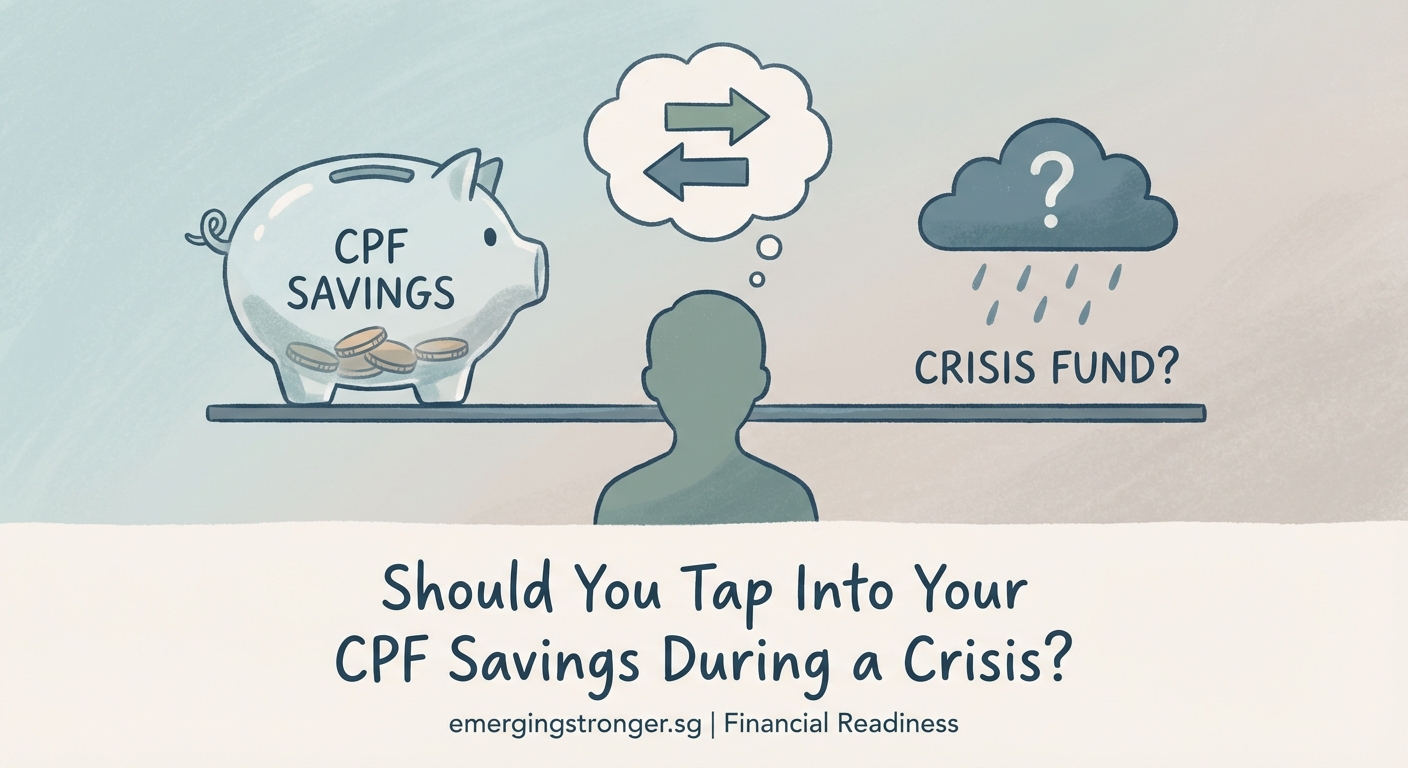
Let’s say you qualify for early withdrawal. What’s the real cost?
The immediate impact is obvious. You get cash now. But the hidden costs run much deeper.
Every dollar you remove from CPF stops earning interest. Your Ordinary Account earns 2.5% annually. Your Special and MediSave Accounts earn 4%. The first $60,000 of combined balances earns an extra 1%.
A 40-year-old withdrawing $20,000 today loses approximately $52,000 by age 65. That’s compound interest working against you instead of for you.
Your retirement adequacy takes a permanent hit. The CPF system calculates your Basic Retirement Sum based on your balances. Lower balances mean lower monthly payouts when you retire.
Here’s what different withdrawal amounts cost you:
| Amount Withdrawn Today | Lost Interest by 65 | Reduced Monthly Payout |
|---|---|---|
| $10,000 | $26,000 | $140 less per month |
| $20,000 | $52,000 | $280 less per month |
| $30,000 | $78,000 | $420 less per month |
These numbers assume you’re 40 years old and won’t replace the withdrawn amount. The actual impact varies based on your age and account balances.
Your housing dreams might also suffer. If you’ve used CPF for property purchase, early withdrawal could trigger complications with property ownership rules.
Better alternatives to CPF withdrawal
Before you even consider touching your CPF, try these options first.
Government assistance schemes
Singapore offers multiple safety nets for residents facing financial hardship. Many people don’t know these exist or feel embarrassed to apply. Don’t be.
ComCare provides financial assistance for basic living expenses. If you’re unemployed or earning low income, you might qualify for monthly support. The application process takes about two weeks.
The COVID-19 Recovery Grant helped thousands during the pandemic. Similar schemes emerge during crises. Check the Ministry of Social and Family Development website regularly.
Workfare Income Supplement tops up wages for lower-income workers. If you’re working but struggling, this might apply to you.
How to navigate Singapore’s retrenchment support programs and benefits covers additional schemes for job loss situations.
Family and community support
Asking family for help feels difficult. But temporary assistance from relatives beats permanent damage to your retirement.
Consider these approaches:
- Frame it as a structured loan with repayment terms
- Offer something in return (childcare, home repairs, other skills)
- Be specific about the amount needed and timeline
Community organisations also provide aid. Family Service Centres operate across Singapore. They offer counselling, financial assistance referrals, and practical support.
Religious organisations often maintain hardship funds for members. If you’re part of a faith community, reach out to leaders privately.
Personal loans and credit facilities
Yes, loans cost money. But they might cost less than raiding your CPF.
Compare these options carefully:
Personal loans from banks typically charge 6% to 8% annually. That’s higher than CPF interest, but you preserve your retirement savings. You can work to repay the loan while CPF continues compounding.
Credit counselling services help negotiate with creditors. Credit Counselling Singapore offers free debt management programmes. They can consolidate debts and arrange affordable repayment plans.
Avoid illegal moneylenders completely. The stress and danger far outweigh any short-term relief.
Selling assets or downsizing
Do you own items of value you can sell? Jewellery, electronics, collections, vehicles?
Downsizing your home releases cash without touching CPF. If you’re living in a larger property than needed, moving to a smaller unit frees up equity. You can even retain some CPF savings this way.
Renting out a spare room provides monthly income. Many Singaporeans host foreign students or working professionals to supplement household finances.
How to build financial resilience for future crises
Facing this emergency teaches an important lesson. You need better financial buffers.
Once you stabilise your current situation, focus on building protection against future shocks. How to build a 6-month emergency fund in Singapore on any salary provides a practical roadmap.
Start small. Even $50 monthly into a separate savings account creates momentum. Automate the transfer so you don’t need to remember.
“The best time to build an emergency fund was yesterday. The second best time is today. Start with whatever amount you can manage, even if it feels insignificant.” – Financial counsellor at Family Service Centre
Cut expenses ruthlessly during the rebuilding phase. Every dollar saved accelerates your recovery. Track spending for one month. You’ll find leaks you didn’t know existed.
Consider income diversification. A side gig, freelance work, or part-time role creates additional cash flow. The gig economy offers flexibility for Singaporeans juggling multiple commitments.
Insurance protects against specific emergencies. Critical illness coverage, disability income insurance, and adequate hospitalisation plans prevent medical crises from becoming financial catastrophes.
The psychological weight of financial crisis
Money stress affects your mental health. That’s not weakness. That’s normal human response to threat.
Finding your support network where Singaporeans turn when things fall apart helps you identify people and resources during difficult times.
Financial anxiety can cloud judgement. You might make impulsive decisions that worsen your situation. Before taking major steps, talk to someone you trust.
Free counselling services exist across Singapore. Samaritans of Singapore operates a 24-hour hotline. They listen without judgement and help you think through options.
Your employer might offer Employee Assistance Programmes with confidential counselling. Check your HR benefits.
The shame around money problems keeps people isolated. But thousands of Singaporeans face similar struggles. You’re not alone, and you’re not a failure.
When CPF withdrawal might actually make sense
In rare situations, accessing CPF could be the right choice.
Terminal illness changes everything. If doctors give you limited time, using MediSave for treatment or withdrawing under compassionate grounds makes sense. Your immediate needs outweigh long-term planning.
Permanent departure from Singapore means you’ll never benefit from CPF anyway. If you’re migrating permanently and have exhausted all other options, withdrawal becomes logical.
Reaching 55 allows limited withdrawal from your Retirement Account after setting aside your Basic Retirement Sum. This is normal CPF function, not emergency withdrawal. Use this money wisely if you genuinely need it.
Even in these scenarios, withdraw only what you absolutely need. Preserve as much as possible for your later years.
Common mistakes people make during financial emergencies
Panic drives poor decisions. Avoid these traps:
Withdrawing more than needed. If you qualify for withdrawal, take only the minimum required. Every extra dollar removed costs you compound interest.
Ignoring government schemes. Pride prevents people from seeking assistance they’re entitled to. Government support exists specifically for situations like yours.
Borrowing from loan sharks. Desperation makes illegal lenders seem like the only option. They’re never the answer. The consequences destroy lives.
Hiding the problem. Telling your spouse, family, or close friends feels terrifying. But secrets make everything worse. Support requires honesty.
Making permanent decisions for temporary problems. This crisis will pass. Decisions that damage your retirement last forever. Think long term even when short term hurts.
Rebuilding after a financial crisis
You’ll get through this. Singaporeans are resilient people.
Why some people bounce back faster and the science of resilience explained offers insights into the recovery process.
Document what you’re learning. Write down what went wrong, what helped, and what you’ll do differently. This crisis becomes wisdom for handling future challenges.
Celebrate small wins during recovery. Paid off one credit card? That’s progress. Built $500 in emergency savings? That’s momentum. Acknowledge every step forward.
How Singapore families can build stronger bonds during financial hardship shows how challenges can strengthen relationships rather than destroy them.
Your credit score might take a hit during this period. That’s repairable. Rebuilding your credit score after financial setbacks in Singapore walks through the recovery process.
Steps to take right now if you’re considering CPF withdrawal
If you’re seriously thinking about CPF withdrawal, follow this process:
- List every expense you face in the next three months. Be specific and realistic.
- Calculate the absolute minimum amount needed to survive this period.
- Research all government assistance schemes you might qualify for.
- Call Credit Counselling Singapore at 6225-5227 for free debt advice.
- Talk to family members who might help temporarily.
- Visit your nearest Family Service Centre for comprehensive support.
- Compare personal loan options from at least three banks.
- Only after exhausting all alternatives, investigate if you qualify for CPF withdrawal.
This sequence matters. CPF withdrawal should be your last option, not your first instinct.
Document everything. Keep records of assistance applications, loan comparisons, and financial counselling sessions. This paper trail helps you make informed decisions.
Protecting your future while managing today
Financial emergencies test your resilience. They force impossible choices between immediate survival and long-term security.
Your CPF represents decades of work and compound interest. Protecting it protects your future self. That 65-year-old version of you deserves consideration, even when today feels overwhelming.
Most Singaporeans facing financial crisis have alternatives to CPF withdrawal. Government schemes, community support, family assistance, and structured loans all exist for exactly these situations. Use them.
If you absolutely must access CPF, understand the full cost. Calculate the lost compound interest. Consider the reduced retirement income. Make the choice with eyes wide open.
But more importantly, work on building the financial resilience that prevents future crises from becoming catastrophic. Emergency funds, adequate insurance, diversified income, and strong support networks create stability.
This difficult moment will pass. The decisions you make during it will echo for decades. Choose wisely. Ask for help. Protect your future while managing your present. You’re stronger than you think, and you don’t have to face this alone.